
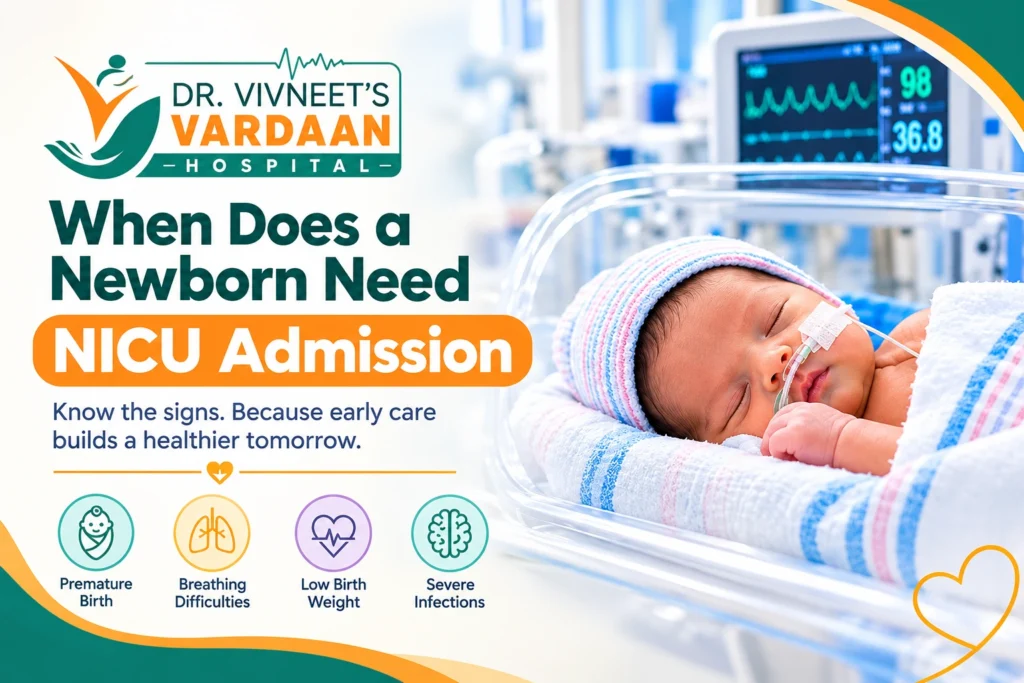
When Does a Newborn Need NICU Admission?
Not every newborn needs special care. However, some babies need extra medical care soon after birth or during their first few weeks.
A baby may need to stay in the Neonatal Intensive Care Unit (NICU) if they are born too early or have health problems. These problems may include trouble breathing, serious infections, severe jaundice, seizures, low oxygen levels at birth, or low blood sugar.
Parents should get medical help immediately if their newborn has trouble breathing, blue lips or tongue, difficulty feeding, unusual sleepiness, pauses in breathing, or seizures.
At Dr. Vivneet’s Vardaan Hospital, Patiala, newborn care includes close health monitoring, breathing support, and care from a team of newborn specialists.
What Is NICU Admission?
A Neonatal Intensive Care Unit (NICU) is a special unit for newborn babies who need extra medical care.
Some babies need NICU care because they are born too early or have a low birth weight. Other babies may develop health problems shortly after birth.
The NICU team checks the baby’s breathing, heartbeat, oxygen levels, body temperature, and feeding. Doctors also check other important signs and give treatment according to the baby’s needs.
Some babies need NICU care for a few days, while others may need to stay for several weeks. The length of stay depends on the baby’s health and recovery.
When Does a Newborn Need NICU Admission?
Doctors may suggest NICU care when a baby needs special treatment or close health monitoring.
1. Premature Birth
Babies born before 37 weeks of pregnancy are called premature babies.
Their lungs and other organs may not be fully developed. Because of this, they may have trouble breathing, keeping their body warm, or feeding properly.
Some premature babies may need an incubator to stay warm, help with breathing, feeding through a tube, or regular health checks.
2. Low Birth Weight
A baby weighing less than 2.5 kg at birth is considered to have a low birth weight.
However, not every baby with a low birth weight needs NICU care. Doctors check the baby’s breathing, body temperature, blood sugar, feeding, and overall health to decide if special care is needed.
If the baby needs extra support or close monitoring, doctors may recommend NICU care.
3. Breathing Problems After Birth
Some newborns have trouble breathing soon after birth. This may happen because they are born too early, have lung problems, develop an infection, or face problems during delivery.
Watch for these warning signs:
- Fast or difficult breathing
- Grunting sounds while breathing
- The chest pulling inward with each breath
- Blue or grey lips or tongue
- Repeated pauses in breathing
Doctors may provide oxygen, CPAP, high-flow breathing support, or a ventilator, depending on the baby’s condition.
4. Severe Newborn Jaundice
Jaundice makes a baby’s skin and eyes look yellow. It happens when too much bilirubin, a yellow substance, builds up in the baby’s blood.
Mild jaundice is common in newborns. However, very high bilirubin levels can harm the baby’s brain if left untreated.
Doctors check the bilirubin level in the baby’s blood and look at the baby’s age and other health risks. Treatment may include phototherapy, which uses special light to reduce bilirubin levels.
Severe cases may need additional treatment and close monitoring.
Important: Yellow skin or eyes during the first 24 hours after birth need prompt medical assessment.
5. Newborn Infections
Newborn babies can get serious infections, such as sepsis. These infections can become dangerous very quickly, so early medical care is important.
Warning signs may include:
- Poor feeding or refusing milk
- Unusual sleepiness
- Fever or a low body temperature
- Breathing problems
- Changes in skin colour
- Reduced activity or unusual crying
Doctors may suggest blood tests and other checks to find the infection. They may also give antibiotics and closely monitor the baby’s health.
6. Birth Asphyxia or Low Oxygen at Birth
Sometimes, a baby does not get enough oxygen around the time of birth. This is called birth asphyxia.
Affected babies may need immediate breathing support and careful monitoring.
Doctors may also check the baby’s brain activity and the function of other organs.
Some babies develop a condition called hypoxic-ischaemic encephalopathy (HIE). It can affect the brain when it does not get enough oxygen. Some babies may benefit from a treatment called therapeutic hypothermia. Doctors must check these babies quickly because treatment usually needs to start within the first six hours after birth.
7. Low Blood Sugar
Newborn babies need enough sugar in their blood to support normal body functions.
Some babies are more likely to have low blood sugar. These include babies born too early, babies with low birth weight, and babies born to mothers who have diabetes.
Possible signs include:
- Poor feeding
- Shaking or trembling
- Unusual sleepiness
- Low body temperature
- Seizures
Some babies may not show any clear symptoms.
Doctors may check the baby’s blood sugar and provide extra feeding support if needed. They may also use glucose gel or give glucose through a vein. The baby may need NICU care for close monitoring or special treatment.
8. Seizures or Unusual Movements
Seizures in newborns may cause repeated jerking, unusual stiffness, staring, or strange movements of the face, arms, or legs.
Some seizures are difficult to notice.
Possible causes include infections, low blood sugar, changes in blood salts, or brain injury around birth.
A newborn with possible seizures needs urgent medical care. Doctors may use EEG or aEEG/CFM monitoring to check the baby’s brain activity if needed.
9. Feeding Problems and Dehydration
Some newborns cannot take enough milk or have difficulty feeding safely.
This may happen because of premature birth, breathing problems, or other medical conditions.
Doctors check the baby’s feeding, weight, urine output, and signs of dehydration.
Some babies may need feeding through a tube or fluids through a vein. Doctors may also do other tests to find the cause of the problem.
Seek medical help immediately if your baby feeds poorly, seems very sleepy, has trouble breathing, or does not respond normally.
10. Birth Conditions or Other Health Problems
Some babies are born with conditions affecting the heart, lungs, digestive system, or other organs.
Others develop medical problems soon after birth.
These babies may need NICU care for medical tests, treatment, close monitoring, or care before and after surgery.
The treatment plan depends on the baby’s condition and medical needs.
Warning Signs: When Should Parents Seek Medical Help?
Newborn babies can become seriously ill very quickly. Parents should seek urgent medical help if their baby has any of these signs:
- Difficulty breathing
- Repeated pauses in breathing
- Blue or grey lips or tongue
- Seizures or repeated unusual movements
- Extreme sleepiness or difficulty waking up
- Poor feeding with signs of illness
- A temperature of 38°C or higher in a baby under three months
- Unusually low body temperature with signs of illness
- Yellow skin or eyes during the first 24 hours after birth
Call emergency services immediately if your baby has severe breathing problems, blue or grey lips or tongue, seizures, or does not respond normally.
Do not wait for a routine appointment if your newborn has these warning signs.
What Happens After NICU Admission?
After admission, the NICU team checks the baby’s condition and decides what treatment is needed.
Care may include:
- Regular checks of breathing, heartbeat, and oxygen levels
- Oxygen or other breathing support
- An incubator to keep the baby warm
- Blood tests and tests for infections
- Phototherapy for jaundice
- Fluids or medicines
- Breast milk or formula feeding support
- Tube feeding when needed
- Brain activity monitoring when required
Doctors and nurses check the baby’s health regularly. They change the treatment as needed to help the baby recover.
The team should also update parents about the baby’s condition, treatment, and feeding plan.
How Long Does a Newborn Stay in the NICU?
The length of a NICU stay depends on the baby’s health.
Some babies need NICU care for only a few days. However, premature babies or babies with serious health problems may need to stay for several weeks.
The length of stay depends on:
- How early the baby was born
- The baby’s medical condition
- The ability to breathe without extra support
- The ability to feed safely
- The baby’s weight and overall progress
Before sending the baby home, doctors make sure the baby is ready for discharge. Parents receive advice about feeding, medicines, follow-up visits, and signs of health problems to watch for.
NICU Care at Dr. Vivneet’s Vardaan Hospital, Patiala
Dr. Vivneet’s Vardaan Hospital in Patiala provides care for newborns who need medical checks, close monitoring, or specialised NICU care.
Depending on the baby’s condition, treatment may include breathing support, jaundice treatment, infection care, feeding support, and monitoring of health problems caused by premature birth.
The neonatal team assesses every baby and recommends suitable treatment or referral when needed.
The need for NICU admission depends on the baby’s condition and the level of medical care required.
If your newborn has warning signs or needs specialised newborn care, seek medical attention promptly.
Follow Dr. Vivneet’s Vardaan Hospital on Instagram and Facebook for more newborn health information.
Frequently Asked Questions
Does every premature baby need NICU admission?
No. Some premature babies remain stable and need only special newborn care. NICU admission depends on their breathing, feeding, temperature, and overall health.
Can a full-term baby need NICU care?
Yes. A full-term baby may need NICU care because of breathing problems, serious infections, severe jaundice, low blood sugar, seizures, or birth complications.
Is NICU admission always an emergency?
No. Some babies are admitted because doctors expect them to need extra care after birth.
However, severe breathing problems, seizures, blue or grey lips, or unresponsiveness require emergency medical attention.
What is the difference between a nursery and a NICU?
A newborn nursery provides routine care for babies who are generally stable.
A NICU provides specialised monitoring and treatment for babies who have medical problems or need extra support.
Can parents visit their baby in the NICU?
Yes, parents may be able to visit their baby according to hospital rules. Visiting arrangements depend on infection-control measures and the baby’s condition.
Parents can ask the neonatal team how they can help with feeding, expressing breast milk, and caring for their baby.
When should I contact a neonatologist?
Contact a neonatologist if your baby was born prematurely, has a low birth weight, needs special follow-up, or has been referred for a medical concern.
Seek emergency care immediately if your baby develops serious warning signs.
Need Urgent Newborn Assessment or NICU Referral?
Early medical assessment helps doctors identify health problems and start suitable treatment.
Do not delay medical care if your baby has breathing difficulties, blue or grey lips or tongue, seizures, or reduced responsiveness.
For newborn emergency assessment or NICU referral at Dr. Vivneet’s Vardaan Hospital, Patiala, call +91 86999 54200.
Every baby is different. NICU admission and treatment depend on the baby’s medical condition and the doctor’s assessment.