
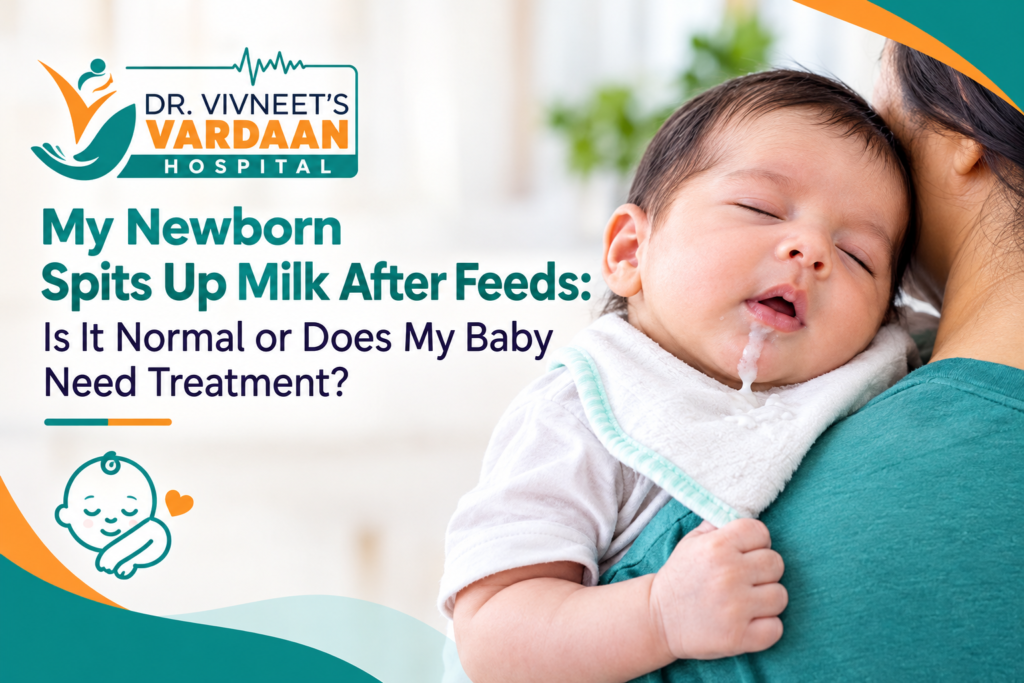
My Newborn Spits Up Milk After Feeds: Is It Normal or Does My Baby Need Treatment?
Seeing your newborn spit up milk after feeding can worry you as a parent. However, small amounts of milk coming back up after feeding are common in young babies.
In many cases, this happens because a newborn’s digestive system is still developing. It can also happen when a baby drinks too quickly, swallows air while feeding, or drinks more milk than the stomach can hold comfortably.
However, not all vomiting is normal. So, parents should know the difference between normal spit-up and signs that may need medical care.
Why Does My Newborn Spit Up Milk After Feeds?
Newborns have small stomachs and developing digestive systems. The muscle that helps keep milk in the stomach is also still maturing.
As a result, some milk may flow back up into the mouth after feeding.
Common reasons include:
- Feeding too much at one time
- Drinking milk too quickly
- Swallowing air during feeding
- Lying down soon after a feed
- Normal infant reflux
- An immature digestive system
If your baby is otherwise comfortable, feeds well, has regular wet nappies, and is gaining weight, occasional small spit-ups are often not a cause for concern.
Is Spitting Up the Same as Vomiting?
No. Spit-up is usually a small and gentle flow of milk from the baby’s mouth. Vomiting is different because it is often stronger and can push stomach contents out with more force.
This difference is important.
A baby who sometimes brings up a small amount of milk but stays comfortable may have normal reflux. However, repeated or forceful vomiting may need a doctor’s assessment.
How Much Spit-Up Is Normal for a Newborn?
It can sometimes look like your baby has brought up a lot of milk, even when the actual amount is small.
There is no fixed amount that is normal for every baby. Instead, parents should look at the baby’s overall health and behaviour.
Signs that are generally reassuring include:
- Your baby feeds well
- Baby appears comfortable after feeds
- Has regular wet nappies
- Your baby is gaining weight
- The spit-up is small and not forceful
- Your baby remains active and responsive
If you are unsure whether your baby’s spit-up is normal, talk to your baby’s doctor or paediatrician.
What Can Parents Do If a Newborn Spits Up After Feeding?
Simple feeding and positioning steps may help reduce spit-up.
1. Avoid Overfeeding
Try to follow your baby’s feeding cues rather than encouraging your baby to take more milk than they need.
2. Burp Your Baby
Burping during or after a feed may help release swallowed air. This can sometimes reduce discomfort and spit-up.
3. Keep Your Baby Upright After Feeding
Holding your baby upright for a short period after feeding may help reduce milk coming back up.
However, when your baby sleeps, always place them on their back on a firm, flat sleep surface.
4. Check Feeding Technique
If your baby is swallowing a lot of air or feeding very quickly, changing the feeding position or technique may help.
For bottle-fed babies, parents can also discuss the teat and feeding method with their healthcare professional.
When Is Newborn Spit-Up a Warning Sign?
Although spit-up is common, some symptoms need medical attention.
Contact a healthcare professional if your baby:
- Vomits repeatedly
- Has forceful or projectile vomiting
- Is not feeding well
- Has fewer wet nappies than usual
- Is not gaining weight as expected
- Appears unusually sleepy, weak, or difficult to wake
- A swollen or painful-looking abdomen
- Blood in the vomit
- Has green or yellow-green vomit
- Has a fever or appears unwell
Green vomit, blood in the vomit, breathing problems, severe weakness, or other serious symptoms need urgent medical assessment.
Could It Be Newborn Reflux?
Yes. Reflux is common in babies because their digestive system is still developing.
With reflux, stomach contents can move back towards the food pipe and sometimes come out through the mouth.
Many babies with mild reflux continue to feed and grow normally. In these cases, treatment may not be need.
However, some babies have reflux symptoms that affect feeding, comfort, or growth. A paediatrician can assess the baby and decide whether further care is need.
When Does a Baby Need Treatment for Spitting Up?
Treatment is not usually need for simple spit-up when the baby is healthy, feeding well, and growing normally.
However, treatment may be considered when vomiting or reflux is causing problems such as:
- Poor feeding
- Poor weight gain
- Frequent distress during or after feeds
- Repeated vomiting
- Dehydration
- Other symptoms that suggest an underlying medical problem
The right treatment depends on the cause. So, parents should not give medicines or change their baby’s feeds without first speaking to a healthcare professional.
When Should I Take My Newborn to a Doctor?
If your newborn keeps vomiting, refuses feeds, loses weight, becomes unusually sleepy, or shows other worrying signs, speak to a healthcare professional for medical advice.
Newborns can become unwell quickly. So, if you are concerned, it is better to speak with a healthcare professional rather than trying to find the cause at home.
FAQs About Newborn Spitting Up Milk
Is it normal for a newborn to spit up milk after every feed?
Small amounts of spit-up can happen frequently in young babies. However, if your baby is vomiting large amounts, appears unwell, is not feeding properly, or is not gaining weight, speak with a paediatrician.
Why does my newborn spit up milk but seem fine?
This can happen because of normal infant reflux or an immature digestive system. If your baby is comfortable, feeding well, and growing normally, occasional spit-up is often not a sign of a serious problem.
How can I reduce my newborn's spit-up?
Avoid overfeeding, check the feeding technique, burp your baby, and keep your baby upright for a short time after feeding. Always follow safe sleep guidance and place your baby on their back for sleep.
Is projectile vomiting normal in newborns?
Projectile vomiting is different from normal small spit-ups. Repeated or forceful vomiting should be assessed by a healthcare professional, especially if your baby has other symptoms or is not feeding well.
Should I give medicine for newborn reflux?
Do not give reflux medicines to a newborn without medical advice. A paediatrician can assess your baby’s symptoms and decide whether treatment is appropriate.
When in Doubt, Get Your Newborn Check
A little milk coming back up after feeds can be normal in newborns. However, repeated, forceful, green, bloody, or otherwise unusual vomiting should not be ignored.
If you are concerned about your baby’s feeding, spit-up, vomiting, weight gain, or overall health, speak with a qualified paediatrician for personalised advice.
Dr. Vivneet’s Vardaan Hospital in Patiala provides paediatric and newborn care for babies who need medical assessment, monitoring, or specialised treatment.