
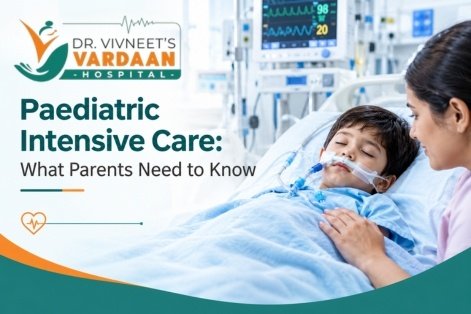
Paediatric Intensive Care: What Parents Need to Know
When your child becomes very sick, you may hear the term Paediatric Intensive Care Unit (PICU). For many parents, hearing this can feel scary. However, a PICU provides close monitoring and specialised care for children who need extra medical support.
At Dr. Vivneet’s Vardaan Hospital in Patiala, paediatric intensive care provides timely treatment, continuous monitoring, and advanced medical support for seriously ill children.
What Is Paediatric Intensive Care?
Paediatric Intensive Care is specialise care for babies, children, and teenagers who are seriously ill or need close medical monitoring.
A Paediatric Intensive Care Unit (PICU) has trained medical staff, specialised equipment, and systems that continuously monitor children. These tools help doctors and nurses quickly notice changes in a child’s condition and provide the right treatment.
Children may need PICU care for severe infections, breathing problems, serious injuries, or other conditions that require close medical care and support.
When Does a Child Need PICU Care?
Not every sick child needs intensive care. Doctors recommend PICU care when a child needs closer monitoring or more advanced treatment than a regular paediatric ward can provide.
A child may need PICU care because of:
- Severe breathing difficulties
- Serious infections
- Severe pneumonia
- Blood pressure or circulation problems
- Serious injuries or accidents
- Seizures requiring close monitoring
- Complications after major surgery
- Severe dehydration or electrolyte problems
- Conditions affecting the brain, heart, lungs, or other organs
The medical team checks each child carefully before deciding if PICU care is need.
What Happens in a PICU?
In the PICU, your child receives continuous medical monitoring. The healthcare team regularly checks important signs such as:
- Heart rate
- Breathing rate
- Oxygen levels
- Blood pressure
- Temperature
- Level of consciousness
Doctors may also use blood tests, scans, or other tests to understand the child’s condition.
Depending on the child’s needs, treatment may include oxygen, medicines, fluids, breathing support, or other specialised care.
Does PICU Mean My Child Is in Serious Danger?
PICU admission means your child needs closer monitoring or specialised medical support. It does not always mean that the child will have a poor outcome.
Children may need PICU care for different reasons and for different lengths of time. Some children recover quickly, while others may need more time for monitoring and treatment.
The medical team will explain your child’s condition, treatment plan, and progress to you.
What Can Parents Expect During PICU Care?
Seeing your child connected to monitors or medical equipment can feel scary. The healthcare team will keep you informed about your child’s condition and explain the care being provided.
Parents can expect:
- Regular updates from the medical team
- Continuous monitoring of the child
- Treatment based on the child’s condition
- Regular assessment of progress
- Communication about tests and procedures
- Guidance about what parents can do during recovery
If you do not understand a medical term or procedure, ask the healthcare team to explain it in simple words.
How Can Parents Support a Child in the PICU?
Your presence can help comfort and reassure your child. Depending on your child’s condition and hospital rules, you may be able to talk to them, hold their hand, or stay close by.
You can also support your child by:
- Staying calm and reassuring
- Following the medical team’s instructions
- Asking questions about treatment
- Sharing important medical history
- Informing doctors about medicines or allergies
- Taking care of your own rest and wellbeing
Remember, it is completely okay to ask questions. Understanding your child’s care can help you feel more informed and prepared.
How Long Does a Child Stay in the PICU?
There is no fixed time for a PICU stay. It depends on the child’s illness, response to treatment, and the level of medical support they need.
When the child’s condition becomes stable and they no longer need intensive monitoring, doctors may move them to a regular paediatric ward or plan for discharge, depending on their recovery.
Paediatric Intensive Care at Dr. Vivneet’s Vardaan Hospital
At Dr. Vivneet’s Vardaan Hospital in Patiala, children who need intensive medical care can receive specialised treatment based on their individual needs.
The hospital focuses on expert medical care, close monitoring, trained healthcare professionals, and advanced medical technology to support children during serious illness.
If your child has severe breathing problems, unusual sleepiness, seizures, a serious infection, or other worrying symptoms, seek urgent medical care. A doctor can assess your child and decide what level of care they need.
Conclusion
Paediatric Intensive Care provides specialised care for children who need close monitoring and advanced medical treatment. Although PICU admission can feel stressful for parents, the goal is to provide your child with the care, treatment, and close monitoring they need during a serious illness.
If you are worry about your child’s health, speak to a qualify paediatrician promptly. Early medical assessment can help doctors understand your child’s condition and decide the right level of care.
Follow up instagram and facebook for more information.
Frequently Asked Questions
What is paediatric intensive care?
Paediatric intensive care is specialise care for seriously ill children who need continuous monitoring, treatment, or advance medical support.
What is the difference between PICU and a normal paediatric ward?
A PICU provides close monitoring and specialise care for children who are seriously ill or need intensive treatment.
Can babies be admit to a PICU?
Yes. Babies may need intensive care depending on their age and medical condition. Newborns usually receive specialised care in a NICU, while older babies and children may receive care in a PICU.Lorem ipsum dolor sit amet, consectetur adipiscing elit. Ut elit tellus, luctus nec ullamcorper mattis, pulvinar dapibus leo.
Is PICU care only for emergencies?
PICU care is often need for serious or emergency conditions. Children may also need intensive monitoring after major surgery or when they have a medical condition that needs close observation.
How can parents help during PICU care?
Parents can support their child by staying calm and reassuring, talking with the medical team, sharing important medical information, and following healthcare instructions.