
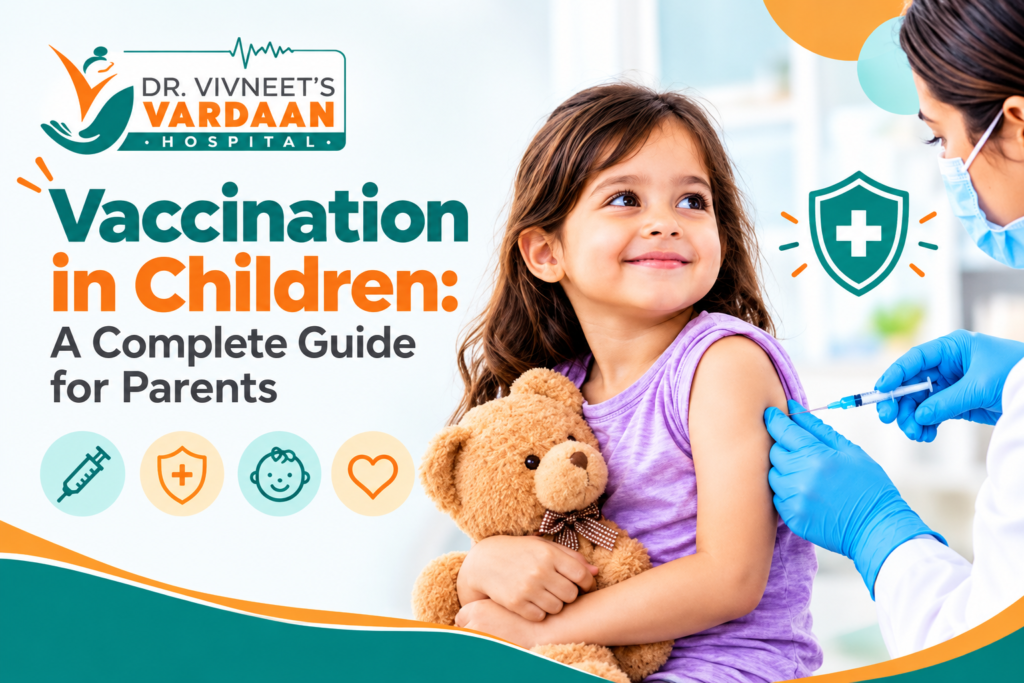
Vaccination in Children: A Complete Guide for Parents
Vaccination in Children: A Complete Guide for Parents Vaccination is an important way to protect children from serious infections. In addition, vaccines help the immune system recognise harmful germs and, as a result, prepare the body to fight these infections. For parents, following the recommended vaccination schedule helps protect children at different stages of growth. Regular visits to a child hospital in Patiala can also help parents keep their child’s vaccination record updated. Why Is Vaccination Important for Children? Children can be more likely to get certain infections because their immune systems are still developing. Vaccines help prepare their immune system to fight diseases before they are expose to them. Childhood vaccines can help protect against illnesses such as: Measles Polio Diphtheria Tetanus Pertussis (whooping cough) Hepatitis B Haemophilus influenzae type b (Hib) Pneumococcal disease Rotavirus Chickenpox, where recommended Vaccination also contributes to community protection by reducing the spread of certain infections. When Should Children Get Vaccinate? Vaccines are generally give according to a child’s age-base schedule. Some vaccines need more than one dose to build and maintain protection. The recommended vaccination schedule may depend on national guidelines, the child’s age, previous vaccinations, health conditions, and other important factors. In addition, a healthcare professional can help parents understand which vaccines may be recommended for their child. Parents should therefore maintain their child’s vaccination card and discuss the schedule with a qualified paediatrician. What Vaccines Do Children Need? The childhood vaccination schedule may include vaccines that protect against several serious infections. In addition, these vaccines help strengthen the child’s immune system and support protection against preventable diseases. Based on the child’s age and vaccination history, a doctor may recommend vaccines such as: BCG Vaccine BCG vaccination helps protect against severe forms of tuberculosis, particularly in children. Polio Vaccine Polio vaccination helps protect children from poliovirus, which can cause serious illness and paralysis. Therefore, following the recommended vaccination schedule is important for maintaining protection against polio. DTaP/DTP Vaccine These vaccines help protect against diphtheria, tetanus, and pertussis. Hepatitis B Vaccine Hepatitis B vaccination helps protect children from the hepatitis B virus, which can cause infection and affect the liver. Therefore, vaccination can help reduce the risk of hepatitis B infection in children. Hib Vaccine The Hib vaccine helps protect against serious infections caused by Haemophilus influenzae type b. Therefore, it plays an important role in protecting children from certain serious bacterial infections. Pneumococcal Vaccine Pneumococcal vaccination helps protect children from infections caused by pneumococcal bacteria. For example, these infections can include some cases of pneumonia and meningitis. Rotavirus Vaccine Rotavirus vaccination helps protect babies and young children from rotavirus infection. As a result, it can help reduce the risk of severe diarrhoea and dehydration caused by the infection. MMR Vaccine The MMR vaccine helps protect against measles, mumps, and rubella. The exact vaccines and timing should follow the vaccination schedule recommended by your child’s healthcare professional. Therefore, parents should consult their child’s healthcare professional for personalised vaccination guidance. Are Vaccines Safe for Children? Vaccines are test and monitor for safety and effectiveness. However, like medicines, they may sometimes cause mild side effects. Common reactions may include: Mild fever Pain or tenderness at the injection site Redness or swelling Irritability Tiredness These reactions are usually mild and temporary. However, parents should contact a healthcare professional if their child develops unusual or worrying symptoms after vaccination. What Should Parents Do Before Vaccination? Before your child’s vaccination appointment: Carry the child’s vaccination record. Tell the doctor about any previous vaccine reactions. Inform the doctor about significant medical conditions or current medicines. Mention if your child is currently unwell. Ask about the vaccine being give and its possible side effects. Follow the recommended schedule for future doses. A paediatrician can check your child’s health and, therefore, decide if vaccination should continue or if a dose needs to be delayed in certain situations. What If My Child Misses a Vaccine? Do not panic if your child misses a scheduled vaccination. Contact your paediatrician and bring your child’s vaccination record to the appointment. This way, the doctor can check previous doses and suggest a suitable catch-up schedule if needed. Parents should avoid restarting or repeating vaccines without professional advice. Can a Child Get Vaccinat When They Have a Mild Illness? A mild illness does not always mean that vaccination needs to be delayed. However, the decision depends on the child’s symptoms and overall health. If your child has a fever, is seriously unwell, or has another health concern, speak with a paediatrician before vaccination. Vaccination and Child Healthcare Vaccination is one important part of keeping children healthy. Regular paediatric check-ups can help monitor your child’s growth, development, nutrition, and overall health. At Dr. Vivneet Vardaan Hospital, parents can consult the paediatric team for their child’s healthcare needs, including vaccination guidance and age-appropriate preventive care. In addition, the team can help parents understand recommended vaccines and routine health needs. Conclusion Vaccination in children helps protect them from many serious infectious diseases. Keeping vaccinations up to date can provide protection during different stages of childhood. Parents should follow the recommended vaccination schedule and keep their child’s vaccination records updated. In addition, if they have questions about missed doses, side effects, or vaccination timing, they should speak with a qualified paediatrician. Dr. Vivneet Vardaan Hospital provides paediatric care in Patiala. In addition, the paediatric team helps parents understand their child’s health needs and make informed decisions about preventive care. Follow up Instagram and Facebook for more information. Frequently Asked Questions About Vaccination in Children Why is vaccination important for children? Vaccination helps protect children from several serious infectious diseases. It prepares their immune system to recognise and fight specific infections. What happens if my child misses a vaccine? Speak with your child’s paediatrician. The doctor can check the vaccination record and recommend a suitable catch-up schedule if needed. Can vaccines cause fever? Some children may have a mild fever after vaccination. Other common reactions include temporary soreness, redness, or swelling