
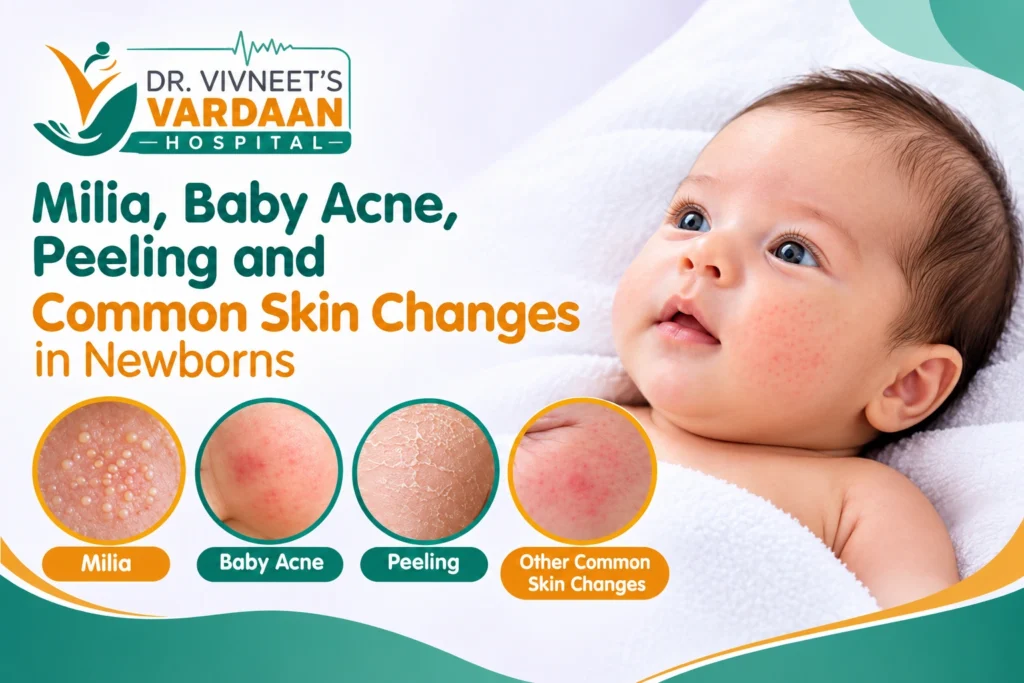
Milia, Baby Acne, Peeling and Common Skin Changes in Newborns
Milia, Baby Acne, Peeling and Common Skin Changes in Newborns A newborn’s skin is soft, delicate, and still adjusting to life outside the womb. During the first few weeks, parents may notice tiny white bumps, red spots, or dry and peeling skin. These changes can look worrying, especially for first-time parents. However, many newborn skin changes are normal and improve on their own. Milia, baby acne, and skin peeling are common examples. Most do not need special treatment. In this guide, Dr. Vivneet’s Vardaan Hospital explains common newborn skin changes, their causes, and how parents can care for their baby’s delicate skin. What Are Common Skin Changes in Newborns? A baby’s skin may look different during the first few days and weeks after birth. This happens because the skin is adapting to the outside environment. Some common newborn skin changes include: Milia: Tiny white or yellow bumps, usually on the nose and cheeks. Baby acne: Small red or white spots on the face. Skin peeling: Dry skin that flakes off, often during the first two weeks. Erythema toxicum: A common newborn rash with red patches and small bumps. Birthmarks: Colour marks that may be present at birth or appear soon after. Dry skin: Mild dryness as the baby’s skin adjusts to its new surroundings. Most of these changes are harmless. However, parents should watch for unusual symptoms and seek medical advice when needed. 1. What Is Milia in Newborns? Milia are tiny white or yellow bumps that often appear on a newborn’s nose, cheeks, chin, or forehead. They develop when small amounts of keratin, a natural skin protein, become trapped beneath the skin’s surface. Milia are very common in newborn babies. Importantly, they are not cause by poor hygiene and are usually not painful or itchy. How Can Parents Care for Milia? Milia usually disappear without treatment within a few weeks. Parents can help by following these simple steps: Gently clean the baby’s face with lukewarm water. Pat the skin dry with a soft, clean towel. Avoid squeezing, scratching, or rubbing the bumps. Do not apply acne creams or strong skincare products. Avoid using home remedies unless advised by a healthcare professional. Remember: Milia usually do not require medicines or special creams. 2. What Is Baby Acne? Baby acne is a common skin condition that causes small red or white bumps on a baby’s face. It usually appears on the cheeks, forehead, and nose. However, it is generally harmless and often clears up on its own. Baby acne often develops during the first few weeks after birth. The exact cause is not fully understand, but hormonal changes may play a role. In most cases, baby acne is harmless and improves on its own over several weeks or months. What Does Baby Acne Look Like? Baby acne may cause: Small red bumps on the cheeks. Tiny white or skin-coloured spots. Mild redness around the affected areas. Spots on the forehead or nose. Baby acne is different from milia, which usually appear as tiny white bumps without surrounding redness. How Should Parents Care for Baby Acne? Simple skin care is usually enough. Wash the baby’s face gently with lukewarm water. Use a soft cloth without scrubbing the skin. Avoid squeezing or picking at the spots. Do not use adult acne products or medicated creams without medical advice. Avoid applying heavy oils or greasy products to the affected areas. However, if the rash becomes severe, spreads, develops blisters, or does not improve, consult a paediatrician. This is important because some skin conditions can look similar to baby acne and may need different treatment. 3. Why Does Newborn Skin Peel? Newborn skin peeling is common, especially during the first one to two weeks after birth. It is often more noticeable in babies born after their expected due date. Before birth, the baby’s skin is protect by a natural coating called vernix. After birth, the skin begins adjusting to the outside environment, and the outer layer may peel. Peeling is often seen on the hands, feet, ankles, and wrists. It may also appear on other parts of the body. Is Skin Peeling Normal in Newborns? Yes, mild peeling is usually normal when the baby is otherwise healthy and feeding well. The peeling generally improves on its own within a short time. However, widespread peeling, painful cracks, blisters, or skin that looks infect should be check by a doctor. How Can Parents Care for Peeling Skin? Follow these simple skin care tips: Give the baby gentle baths using lukewarm water. Avoid long baths and very hot water. Pat the skin dry instead of rubbing it. Do not pull or remove loose skin. Avoid scented soaps, powders, and harsh skincare products. Ask your paediatrician before using moisturisers if the skin is very dry or irritated. In most cases, newborn skin peeling does not require special treatment. 4. Other Common Newborn Skin Changes In addition to milia, baby acne, and peeling, newborns may also develop other harmless skin changes. Erythema Toxicum Moreover, erythema toxicum is a common newborn rash. It may appear as red patches with small white or yellow bumps in the centre. The rash can appear on the face, chest, back, arms, or legs. It usually develops during the first few days after birth and clears without treatment. However, parents should seek medical advice if the baby has a fever, blisters, poor feeding, or appears unwell. Birthmarks Some babies are born with birthmarks, while others develop them soon after birth. Common examples include: Salmon patches: Flat pink or red marks, often on the eyelids, forehead, or back of the neck. Congenital dermal melanocytosis: Flat blue-grey patches, often on the lower back or buttocks. Infantile haemangiomas: Red or raised marks that may become more noticeable during the first weeks of life. Many birthmarks are harmless. However, a doctor should assess any mark that grows quickly, bleeds, develops an ulcer, or affects the eyes, nose, or mouth. Dry Skin and Small Red Spots Additionally, a newborn’s skin