
neonatologist in Patiala

newborn NICU admission
Blog

When Does a Newborn Need NICU Admission

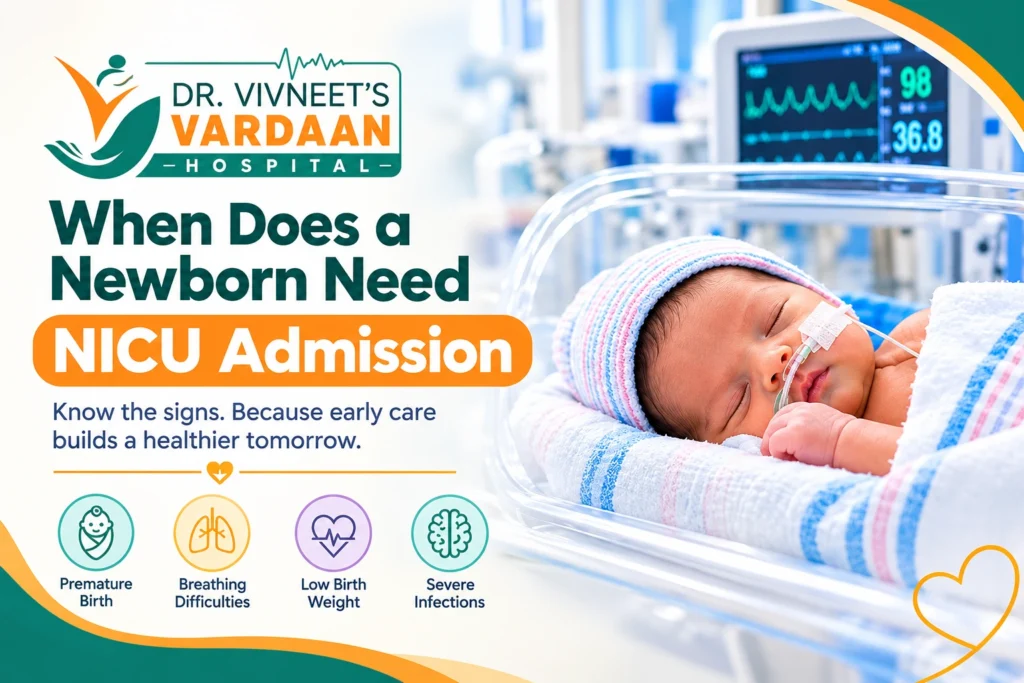
When Does a Newborn Need NICU Admission? Not every newborn needs special care. However, some babies need extra medical care soon after birth or during their first few weeks. A baby may need to stay in the Neonatal Intensive Care Unit (NICU) if they are born too early or have health problems. These problems may include trouble breathing, serious infections, severe jaundice, seizures, low oxygen levels at birth, or low blood sugar. Parents should get medical help immediately if their newborn has trouble breathing, blue lips or tongue, difficulty feeding, unusual sleepiness, pauses in breathing, or seizures. At Dr. Vivneet’s Vardaan Hospital, Patiala, newborn care includes close health monitoring, breathing support, and care from a team of newborn specialists. What Is NICU Admission? A Neonatal Intensive Care Unit (NICU) is a special unit for newborn babies who need extra medical care. Some babies need NICU care because they are born too early or have a low birth weight. Other babies may develop health problems shortly after birth. The NICU team checks the baby’s breathing, heartbeat, oxygen levels, body temperature, and feeding. Doctors also check other important signs and give treatment according to the baby’s needs. Some babies need NICU care for a few days, while others may need to stay for several weeks. The length of stay depends on the baby’s health and recovery. When Does a Newborn Need NICU Admission? Doctors may suggest NICU care when a baby needs special treatment or close health monitoring. 1. Premature Birth Babies born before 37 weeks of pregnancy are called premature babies. Their lungs and other organs may not be fully developed. Because of this, they may have trouble breathing, keeping their body warm, or feeding properly. Some premature babies may need an incubator to stay warm, help with breathing, feeding through a tube, or regular health checks. 2. Low Birth Weight A baby weighing less than 2.5 kg at birth is considered to have a low birth weight. However, not every baby with a low birth weight needs NICU care. Doctors check the baby’s breathing, body temperature, blood sugar, feeding, and overall health to decide if special care is needed. If the baby needs extra support or close monitoring, doctors may recommend NICU care. 3. Breathing Problems After Birth Some newborns have trouble breathing soon after birth. This may happen because they are born too early, have lung problems, develop an infection, or face problems during delivery. Watch for these warning signs: Fast or difficult breathing Grunting sounds while breathing The chest pulling inward with each breath Blue or grey lips or tongue Repeated pauses in breathing Doctors may provide oxygen, CPAP, high-flow breathing support, or a ventilator, depending on the baby’s condition. 4. Severe Newborn Jaundice Jaundice makes a baby’s skin and eyes look yellow. It happens when too much bilirubin, a yellow substance, builds up in the baby’s blood. Mild jaundice is common in newborns. However, very high bilirubin levels can harm the baby’s brain if left untreated. Doctors check the bilirubin level in the baby’s blood and look at the baby’s age and other health risks. Treatment may include phototherapy, which uses special light to reduce bilirubin levels. Severe cases may need additional treatment and close monitoring. Important: Yellow skin or eyes during the first 24 hours after birth need prompt medical assessment. 5. Newborn Infections Newborn babies can get serious infections, such as sepsis. These infections can become dangerous very quickly, so early medical care is important. Warning signs may include: Poor feeding or refusing milk Unusual sleepiness Fever or a low body temperature Breathing problems Changes in skin colour Reduced activity or unusual crying Doctors may suggest blood tests and other checks to find the infection. They may also give antibiotics and closely monitor the baby’s health. 6. Birth Asphyxia or Low Oxygen at Birth Sometimes, a baby does not get enough oxygen around the time of birth. This is called birth asphyxia. Affected babies may need immediate breathing support and careful monitoring. Doctors may also check the baby’s brain activity and the function of other organs. Some babies develop a condition called hypoxic-ischaemic encephalopathy (HIE). It can affect the brain when it does not get enough oxygen. Some babies may benefit from a treatment called therapeutic hypothermia. Doctors must check these babies quickly because treatment usually needs to start within the first six hours after birth. 7. Low Blood Sugar Newborn babies need enough sugar in their blood to support normal body functions. Some babies are more likely to have low blood sugar. These include babies born too early, babies with low birth weight, and babies born to mothers who have diabetes. Possible signs include: Poor feeding Shaking or trembling Unusual sleepiness Low body temperature Seizures Some babies may not show any clear symptoms. Doctors may check the baby’s blood sugar and provide extra feeding support if needed. They may also use glucose gel or give glucose through a vein. The baby may need NICU care for close monitoring or special treatment. 8. Seizures or Unusual Movements Seizures in newborns may cause repeated jerking, unusual stiffness, staring, or strange movements of the face, arms, or legs. Some seizures are difficult to notice. Possible causes include infections, low blood sugar, changes in blood salts, or brain injury around birth. A newborn with possible seizures needs urgent medical care. Doctors may use EEG or aEEG/CFM monitoring to check the baby’s brain activity if needed. 9. Feeding Problems and Dehydration Some newborns cannot take enough milk or have difficulty feeding safely. This may happen because of premature birth, breathing problems, or other medical conditions. Doctors check the baby’s feeding, weight, urine output, and signs of dehydration. Some babies may need feeding through a tube or fluids through a vein. Doctors may also do other tests to find the cause of the problem. Seek medical help immediately if your baby feeds poorly, seems very sleepy, has trouble breathing, or does not respond normally. 10. Birth Conditions or Other
Newborn Jaundice Warning Signs
Blog

Newborn Jaundice: When Is Yellow Skin Dangerous

Newborn Jaundice: When Is Yellow Skin Dangerous? Newborn jaundice is a common condition that makes a baby’s skin and the whites of their eyes look yellow. It usually starts in the first few days after birth. In most babies, it gets better as the liver develops and removes a substance called bilirubin from the blood. However, jaundice can sometimes become serious if bilirubin levels rise too high. Therefore, parents should know the warning signs and get medical help when need. At Dr. Vivneet’s Vardaan Hospital, Patiala, newborns can get medical check-ups and treatment if their jaundice needs close monitoring or care. What Is Newborn Jaundice? Newborn jaundice happens when too much bilirubin builds up in a baby’s blood. Bilirubin is a yellow substance that forms when the body breaks down old red blood cells. A newborn’s liver is still growing and developing. Therefore, it may not remove bilirubin from the blood quickly enough. As a result, the baby’s skin and the whites of their eyes may turn yellow. This condition is neonatal jaundice. It is common during the first week after birth. Most babies recover well. However, some need blood tests, regular checks, or special treatment. What Causes Jaundice in Newborn Babies? Several things can cause jaundice in newborns. Here are the most common causes. 1. An Immature Liver A newborn’s liver is still developing. So, it may take time to remove bilirubin from the blood. As a result, the baby’s skin and eyes may turn yellow. 2. Premature Birth Premature babies are born before 37 weeks of pregnancy. Their livers are less developed and may take longer to work properly. Therefore, these babies have a higher risk of jaundice and may need more frequent check-ups. 3. Feeding Problems Babies who do not get enough breast milk or formula may pass fewer stools. As a result, their bodies may find it harder to remove bilirubin. Therefore, early feeding support is important. It helps babies get enough milk and stay hydrated. 4. Blood Group Differences Sometimes, the mother’s and baby’s blood groups do not match. This can cause the baby’s red blood cells to break down faster, leading to higher bilirubin levels. As a result, bilirubin levels may rise quickly. Doctors may need to check the baby more closely. 5. Infection or Other Health Problems Sometimes, jaundice is link to an infection, an enzyme problem, or another medical condition. In these cases, a doctor must check the baby to find the cause and provide the right treatment. When Is Newborn Jaundice Dangerous? Yellow skin does not always mean jaundice is serious. However, some warning signs need urgent medical care. Parents should seek medical help immediately if they notice any of these warning signs in their baby. 1. Yellow Skin Within the First 24 Hours If jaundice starts within the first 24 hours after birth, it may be a sign of a serious problem. The baby needs urgent medical checks and a bilirubin test. Do not wait for the yellow colour to go away on its own. 2. Yellow Skin That Gets Worse Jaundice usually starts on the baby’s face. Later, the yellow colour may spread to the chest, tummy, arms, and legs. If the yellow colour becomes stronger or spreads quickly, seek medical advice promptly. However, skin colour alone cannot tell how high the bilirubin level is. Therefore, a medical test may be needed. 3. Poor Feeding or Difficulty Waking Up A baby with jaundice may drink less milk than usual or sleep more than normal. Some babies may also be difficult to wake up for feeding. These signs may indicate severe jaundice or another health problem. Therefore, seek medical help immediately if your baby feeds poorly or is very difficult to wake up. 4. A High-Pitched Cry or Unusual Body Movements A very high-pitched cry, a stiff body, or unusual bending of the back can be signs of severe jaundice. Abnormal body movements can also indicate a serious problem. These signs need emergency medical care. Do not delay getting help. 5. Fever or Breathing Problems A newborn with a temperature of 38°C or higher needs immediate medical attention. Breathing problems, pauses in breathing, or extreme weakness also need emergency care. Do not assume these signs are cause by jaundice alone. They may point to another serious illness. 6. Dark Urine or Pale Stools A newborn’s urine should not usually be dark yellow or brown. Similarly, white, chalky, or very pale stools are not normal. These signs may indicate a problem with the liver or the flow of bile. Therefore, arrange prompt medical assessment, even if your baby seems otherwise well. How Is Newborn Jaundice Diagnose? Doctors check the baby’s age, birth history, feeding, and general health. They also look for signs of yellow skin and eyes. However, looking at the skin is not enough to measure bilirubin accurately. Doctors may recommend the following tests. Bilirubin Test Through the Skin A special device measures bilirubin through the baby’s skin. This test does not usually require a blood sample. Blood Bilirubin Test Doctors may take a small blood sample to measure the bilirubin level more accurately. Other Blood Tests If needed, doctors may check for blood group problems, infections, or other conditions that can cause jaundice. The doctor checks the baby’s age in hours, how many weeks early they were born, bilirubin level, and other health risks. These details help the doctor decide if the baby needs more tests or treatment. How Is Newborn Jaundice Treat? Treatment depends on the baby’s bilirubin level, age, and overall health. 1. Regular Feeding and Feeding Support Regular feeding helps babies pass stools and remove bilirubin from their bodies. In the first few days, most newborns need 8–12 feeds every 24 hours. If breastfeeding is difficult, a healthcare professional can help check whether the baby is feeding well and getting enough milk. Do not give water, sugar water, or home remedies to treat jaundice. 2. Phototherapy Phototherapy is a common treatment for newborn jaundice. It

Is 10% newborn weight loss normal
Blog

Is 10% Newborn Weight Loss Normal

Is 10% Newborn Weight Loss Normal? When Should Parents Worry? Newborn babies often lose some weight during the first few days after birth. For new parents, this can be worrying. However, a small amount of weight loss is usually normal as the baby adjusts to life outside the womb. But is 10% newborn weight loss normal? The answer depends on your baby’s age, feeding habits, and overall health. A weight loss of around 10% needs careful attention and assessment by a doctor. In this blog, we explain why newborns lose weight, when to seek medical advice, and how parents can support healthy newborn growth. Is 10% Newborn Weight Loss Normal? Some weight loss is normal during the first few days of life. Babies lose extra fluid after birth, so their weight may decrease temporarily. However, 10% weight loss is an important warning point that needs medical assessment. If your baby loses more than 10% of their birth weight, a paediatrician should check their feeding, hydration, and general health. For example, if your baby weighed 3 kg at birth, a 10% weight loss means they now weigh 2.7 kg. This does not always mean something is seriously wrong. However, it is important to identify the cause and make sure your baby is getting enough milk. Why Do Newborn Babies Lose Weight After Birth? There are several reasons why newborn babies lose weight during the first few days. 1. Loss of Extra Body Fluid Before birth, babies receive fluids through the placenta. After birth, their bodies begin adjusting to life outside the womb. As a result, they naturally lose some extra fluid. 2. Breastfeeding Is Still Becoming Established During the first few days, mothers produce colostrum, the first milk. It is rich in nutrients and antibodies. However, it is produce in small amounts. Sometimes, babies may need help learning to latch properly and feed effectively. Therefore, a feeding assessment can help identify any difficulties. 3. Feeding Difficulties Some newborns may not get enough milk because of a poor latch, sleepy feeding behaviour, or difficulties with sucking and swallowing. Consequently, their weight may drop more than expected. Early feeding support can help address these problems. When Does Newborn Weight Loss Become a Concern? Parents should pay attention to the amount of weight their baby loses and how quickly the baby starts gaining weight again. The following signs need attention: Your baby loses 10% or more of their birth weight. Struggles to latch or feed properly. Your baby has fewer wet nappies than expected for their age. Appears unusually sleepy or difficult to wake. Develops yellowing of the skin or eyes. Continues losing weight instead of starting to gain it. Seek urgent medical advice if your baby has significant weight loss or signs of poor feeding or dehydration. If your baby is difficult to wake, has breathing difficulties, or appears seriously unwell, seek emergency medical care. How Can Parents Tell If Their Newborn Is Getting Enough Milk? Weight is only one way to check whether your baby is feeding well. Parents should also observe feeding patterns, wet nappies, and their baby’s behaviour. Look for these signs: Regular feeding: Newborns commonly breastfeed 8–12 times in 24 hours. Wet nappies: The number should increase over the first few days. By around day five, babies generally have at least six wet nappies in 24 hours. Effective sucking: Your baby should show signs of sucking and swallowing during feeds. Alert behaviour: Your baby should wake for feeds and respond normally. Steady weight gain: After the initial weight loss, your baby should begin gaining weight. These signs can help parents understand whether feeding is going well. However, they do not replace a newborn check-up. How Can You Help Your Newborn Gain Weight Safely? If your baby has lost more weight than expected, your doctor may recommend the following steps. 1. Feed Your Baby Frequently Offer feeds regularly and respond to your baby’s hunger cues. If your baby is very sleepy or feeding poorly, ask your doctor how often to wake them for feeds. 2. Check the Breastfeeding Latch A good latch helps your baby transfer milk effectively. A paediatrician, neonatal nurse, or qualified lactation professional can assess feeding and suggest improvements. 3. Monitor Wet Nappies Keep track of wet and dirty nappies. Fewer wet nappies than expected may indicate that your baby is not getting enough milk or may be dehydrated. 4. Attend Newborn Follow-Up Visits Regular weight checks help doctors monitor your baby’s progress. Many babies regain their birth weight within 7–14 days, although some take longer. 5. Follow Your Doctor’s Feeding Advice Some babies need additional feeding support. Your doctor can assess whether expressed breast milk, formula supplementation, or further investigations are appropriate. Do not give water to a newborn or change their feeding plan without medical advice. When Should You Contact a Paediatrician? Contact a paediatrician promptly if your newborn loses 10% or more of their birth weight, is not feeding well, or has fewer wet nappies than expected. You should also arrange a check-up if your baby continues losing weight or does not regain their birth weight as expected. Early assessment helps doctors identify feeding difficulties, dehydration, jaundice, or other health concerns. It also gives parents practical guidance on supporting healthy growth. Newborn Care at Dr. Vivneet’s Vardaan Hospital, Patiala Monitoring your baby’s weight is an important part of newborn care. At Dr. Vivneet’s Vardaan Hospital, Patiala, parents can seek medical guidance about newborn feeding, weight monitoring, and concerns about early growth. A newborn’s weight should always be assess alongside feeding patterns, hydration, and overall health. If you are worry about your baby’s weight loss, consult a paediatrician or neonatologist for an appropriate assessment. Your baby’s health matters. Do not ignore significant weight loss or feeding difficulties during the first days of life. Conclusion Some newborn weight loss is normal, but 10% weight loss should not be ignored. Your baby’s age, feeding, hydration, and overall condition all matter. With timely medical assessment, feeding support,

newborn baby care in Patiala
Blog

Newborn Baby Care in Patiala What New Parents Should Know

Newborn Baby Care in Patiala: What New Parents Should Know Bringing a newborn home is a happy and exciting time, but it can also bring many questions. New parents may have concerns about feeding, sleeping, bathing, crying, vaccinations, and common baby problems. Proper newborn baby care in Patiala helps parents understand their baby’s needs and notice any warning signs early. Regular check-ups and advice from a qualified pediatrician or neonatologist can help support healthy growth and development. What Is Newborn Baby Care? Newborn baby care means giving your baby the basic care and support they need during the first few weeks and months. It includes: Feeding and nutrition Safe sleeping practices Umbilical cord care Bathing and hygiene Vaccinations Monitoring weight and growth Newborn screening Managing common newborn concerns Regular pediatric check-ups Every baby is different. So, parents should follow advice based on their baby’s health and needs. 1. Feeding Your Newborn Baby Feeding is an important part of newborn care. Breast milk gives babies important nutrients and helps support their immune system. New parents should feed their baby as advised by their healthcare provider. Newborns may need to feed often because their stomachs are small. Parents should also look for signs that the baby is feeding well, such as regular wet diapers, active feeding, and healthy weight gain. If your baby has trouble feeding, vomits often, or seems very sleepy during feeds, talk to a pediatrician. 2. Keep Your Baby Warm and Comfortable Newborn babies cannot control their body temperature as well as older children. Keep your baby comfortable and avoid making them too hot. Dress your baby according to the room temperature. Avoid using too many clothes or blankets, as this can make the baby too hot. Parents should also keep the baby away from very hot or very cold places. 3. Follow Safe Sleeping Practices Safe sleep is an important part of newborn baby care. For safer sleep: Place your baby on their back to sleep. Use a firm, flat sleep surface. Keep pillows, loose blankets, and soft toys away from the baby. Avoid exposing the baby to cigarette smoke. Follow your pediatrician’s advice about safe sleeping arrangements. These simple steps can help create a safer sleeping environment. 4. Take Care of the Umbilical Cord The umbilical cord stump usually dries and falls off on its own. Keep the area clean and dry. Do not pull or remove the umbilical cord stump yourself. Contact a healthcare professional if you notice: Increasing redness around the area Swelling Pus or unusual discharge Bad smell Bleeding that does not stop Fever or other signs of illness 5. Maintain Good Newborn Hygiene Newborn babies have delicate skin. Use mild products and avoid strong soaps, perfumes, or scented products. During bathing, always watch your baby closely. Never leave a newborn alone in or near water, even for a few seconds. Keep your baby’s clothes, bedding, and surroundings clean to maintain good hygiene. 6. Keep Up With Vaccinations Vaccinations are an important part of newborn and baby care. Babies get vaccines according to the recommended vaccination schedule. Parents should keep a record of their baby’s vaccinations and talk to their pediatrician about the vaccination schedule. If you are not sure which vaccine your baby needs next, ask your child’s doctor. 7. Regular Newborn Check-Ups Are Important Regular check-ups allow doctors to monitor your baby’s: Weight and height Feeding Growth and development Vaccination status Hearing and vision concerns General health These visits also give new parents a chance to ask questions about feeding, sleep, crying, digestion, and other baby-related concerns. 8. Understand Your Baby’s Crying Crying is one of the main ways newborn babies communicate. A baby may cry because of: Hunger A wet or dirty diaper Feeling too hot or cold Tiredness Need for comfort Gas or other discomfort If your baby’s crying seems unusual, continues for a long time, or comes with other symptoms, talk to a pediatrician. 9. Watch for Newborn Warning Signs New parents should know when a baby may need medical attention. Seek prompt medical assessment if your newborn has: Difficulty breathing Blue or grey lips or skin Poor feeding Repeated vomiting Unusual sleepiness or difficulty waking Seizures Significant reduction in wet diapers Fever or unusually low temperature Yellowing that is worsening or concerning Any sudden change in behaviour or condition If your baby seems seriously unwell or has trouble breathing, seek emergency medical care right away. 10. When Should You See a Pediatrician or Neonatologist? A pediatrician provides regular care for babies and children. A neonatologist specialises in caring for newborns, especially premature or medically complex babies. You may need specialist newborn care if your baby: Was born prematurely Had a low birth weight Has breathing difficulties Has feeding problems Needs intensive monitoring Has jaundice requiring medical assessment Has another medical condition requiring specialist care Early medical check-ups can help find problems early and ensure your baby gets the right care. Newborn Baby Care in Patiala Parents looking for newborn baby care in Patiala should choose a hospital where experienced pediatricians and neonatologists can monitor their baby’s health. Dr. Vivneet’s Vardaan Hospital provides mother and child healthcare with newborn and pediatric care facilities. Parents can consult healthcare professionals for newborn check-ups, feeding concerns, vaccinations, growth monitoring, and other health problems. Tips for New Parents Caring for a newborn can feel overwhelming at first. These simple habits can help: Attend regular newborn check-ups. Follow the recommended vaccination schedule. Maintain good hand hygiene before handling your baby. Follow safe sleeping practices. Keep track of feeding and wet diapers. Avoid giving medicines without medical advice. Ask your pediatrician about any unusual symptoms. Keep emergency contact information easily available. Conclusion Newborn babies need proper nutrition, safe sleep, good hygiene, vaccinations, and regular health check-ups. Learning the basics of newborn baby care in Patiala can help new parents feel more confident while caring for their baby. If you notice any unusual symptoms or changes in your newborn’s health, consult a qualified pediatrician or

Scroll to Top