Newborn Jaundice: When Is Yellow Skin Dangerous
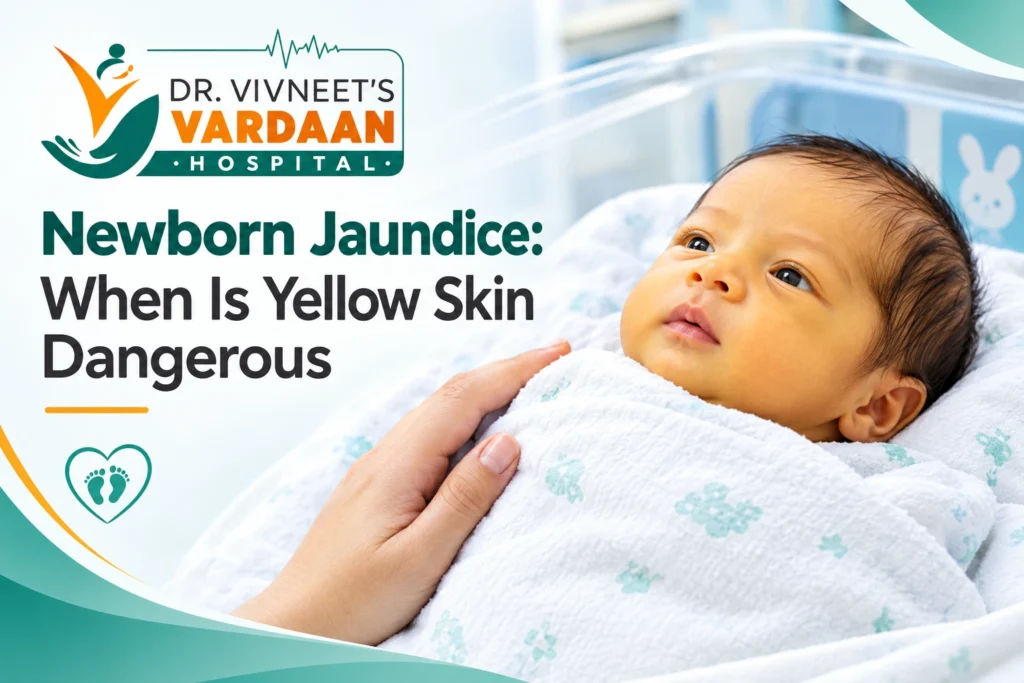
Newborn Jaundice: When Is Yellow Skin Dangerous? Newborn jaundice is a common condition that makes a baby’s skin and the whites of their eyes look yellow. It usually starts in the first few days after birth. In most babies, it gets better as the liver develops and removes a substance called bilirubin from the blood. However, jaundice can sometimes become serious if bilirubin levels rise too high. Therefore, parents should know the warning signs and get medical help when need. At Dr. Vivneet’s Vardaan Hospital, Patiala, newborns can get medical check-ups and treatment if their jaundice needs close monitoring or care. What Is Newborn Jaundice? Newborn jaundice happens when too much bilirubin builds up in a baby’s blood. Bilirubin is a yellow substance that forms when the body breaks down old red blood cells. A newborn’s liver is still growing and developing. Therefore, it may not remove bilirubin from the blood quickly enough. As a result, the baby’s skin and the whites of their eyes may turn yellow. This condition is neonatal jaundice. It is common during the first week after birth. Most babies recover well. However, some need blood tests, regular checks, or special treatment. What Causes Jaundice in Newborn Babies? Several things can cause jaundice in newborns. Here are the most common causes. 1. An Immature Liver A newborn’s liver is still developing. So, it may take time to remove bilirubin from the blood. As a result, the baby’s skin and eyes may turn yellow. 2. Premature Birth Premature babies are born before 37 weeks of pregnancy. Their livers are less developed and may take longer to work properly. Therefore, these babies have a higher risk of jaundice and may need more frequent check-ups. 3. Feeding Problems Babies who do not get enough breast milk or formula may pass fewer stools. As a result, their bodies may find it harder to remove bilirubin. Therefore, early feeding support is important. It helps babies get enough milk and stay hydrated. 4. Blood Group Differences Sometimes, the mother’s and baby’s blood groups do not match. This can cause the baby’s red blood cells to break down faster, leading to higher bilirubin levels. As a result, bilirubin levels may rise quickly. Doctors may need to check the baby more closely. 5. Infection or Other Health Problems Sometimes, jaundice is link to an infection, an enzyme problem, or another medical condition. In these cases, a doctor must check the baby to find the cause and provide the right treatment. When Is Newborn Jaundice Dangerous? Yellow skin does not always mean jaundice is serious. However, some warning signs need urgent medical care. Parents should seek medical help immediately if they notice any of these warning signs in their baby. 1. Yellow Skin Within the First 24 Hours If jaundice starts within the first 24 hours after birth, it may be a sign of a serious problem. The baby needs urgent medical checks and a bilirubin test. Do not wait for the yellow colour to go away on its own. 2. Yellow Skin That Gets Worse Jaundice usually starts on the baby’s face. Later, the yellow colour may spread to the chest, tummy, arms, and legs. If the yellow colour becomes stronger or spreads quickly, seek medical advice promptly. However, skin colour alone cannot tell how high the bilirubin level is. Therefore, a medical test may be needed. 3. Poor Feeding or Difficulty Waking Up A baby with jaundice may drink less milk than usual or sleep more than normal. Some babies may also be difficult to wake up for feeding. These signs may indicate severe jaundice or another health problem. Therefore, seek medical help immediately if your baby feeds poorly or is very difficult to wake up. 4. A High-Pitched Cry or Unusual Body Movements A very high-pitched cry, a stiff body, or unusual bending of the back can be signs of severe jaundice. Abnormal body movements can also indicate a serious problem. These signs need emergency medical care. Do not delay getting help. 5. Fever or Breathing Problems A newborn with a temperature of 38°C or higher needs immediate medical attention. Breathing problems, pauses in breathing, or extreme weakness also need emergency care. Do not assume these signs are cause by jaundice alone. They may point to another serious illness. 6. Dark Urine or Pale Stools A newborn’s urine should not usually be dark yellow or brown. Similarly, white, chalky, or very pale stools are not normal. These signs may indicate a problem with the liver or the flow of bile. Therefore, arrange prompt medical assessment, even if your baby seems otherwise well. How Is Newborn Jaundice Diagnose? Doctors check the baby’s age, birth history, feeding, and general health. They also look for signs of yellow skin and eyes. However, looking at the skin is not enough to measure bilirubin accurately. Doctors may recommend the following tests. Bilirubin Test Through the Skin A special device measures bilirubin through the baby’s skin. This test does not usually require a blood sample. Blood Bilirubin Test Doctors may take a small blood sample to measure the bilirubin level more accurately. Other Blood Tests If needed, doctors may check for blood group problems, infections, or other conditions that can cause jaundice. The doctor checks the baby’s age in hours, how many weeks early they were born, bilirubin level, and other health risks. These details help the doctor decide if the baby needs more tests or treatment. How Is Newborn Jaundice Treat? Treatment depends on the baby’s bilirubin level, age, and overall health. 1. Regular Feeding and Feeding Support Regular feeding helps babies pass stools and remove bilirubin from their bodies. In the first few days, most newborns need 8–12 feeds every 24 hours. If breastfeeding is difficult, a healthcare professional can help check whether the baby is feeding well and getting enough milk. Do not give water, sugar water, or home remedies to treat jaundice. 2. Phototherapy Phototherapy is a common treatment for newborn jaundice. It