
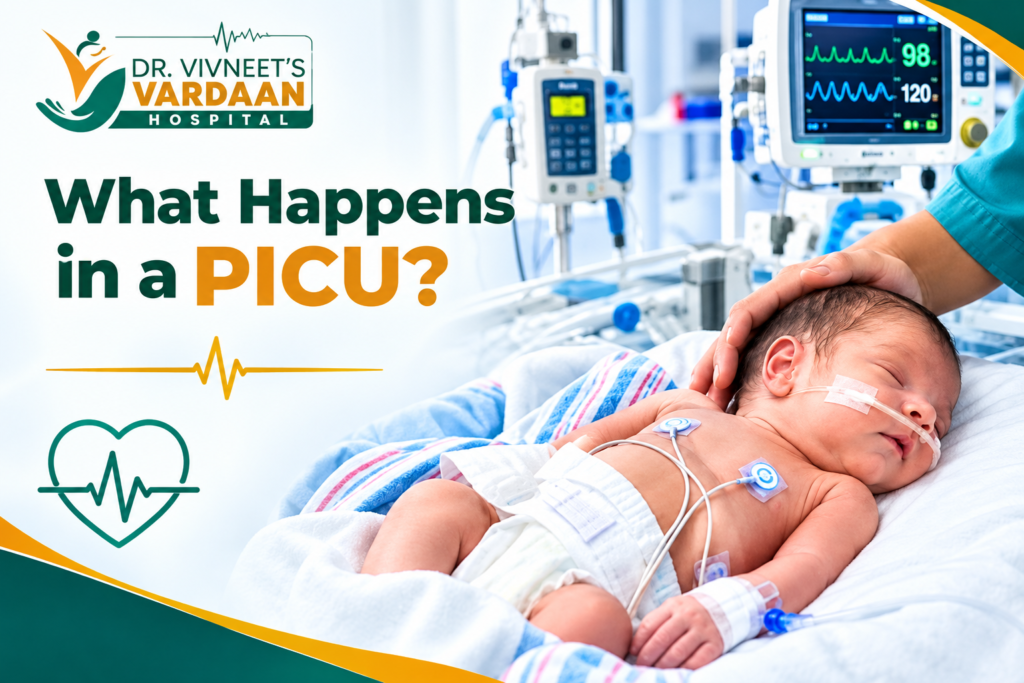
What Happens in a PICU
What Happens in a PICU? A Simple Guide for Parents When your child needs intensive medical care, doctors may recommend a PICU (Paediatric Intensive Care Unit). This can feel stressful for parents. However, knowing what happens in a PICU can help you feel more prepared. A PICU provides special care for children who need close monitoring, advanced treatment, or support for serious health problems. A trained medical team closely monitors your child and provides care based on their needs. What Is a PICU? A Paediatric Intensive Care Unit (PICU) is a special hospital unit for children who need intensive medical care. It cares for babies, children, and teenagers who need close monitoring or treatment that may not be available in a regular ward. Children may need PICU care after a serious infection, injury, surgery, breathing problem, or other health condition. Treatment depends on the child’s needs and the medical team’s advice. Why Does a Child Need PICU Care? Doctors may recommend PICU admission when a child needs closer monitoring or more medical support than a regular children’s ward can provide. Some reasons may include: Severe breathing difficulties Serious infections Major injuries or accidents Complications after surgery Severe dehydration or electrolyte problems Seizures or neurological conditions Heart-related problems Problems affecting multiple organs The need for breathing or other organ support PICU admission does not always mean a child has a life-threatening condition. Sometimes, children need extra monitoring or special treatment, so doctors admit them to the PICU. What Happens When a Child Enters the PICU? When your child arrives in the PICU, the medical team checks their condition. They may check breathing, heart rate, blood pressure, oxygen levels, temperature, and other vital signs. The team may also ask about your child’s symptoms, medical history, medicines, allergies, and recent treatments. Based on this assessment, doctors make a treatment and monitoring plan for your child. How Is a Child Monitor in the PICU? PICU staff closely monitor children during their stay. Your child may use monitors that check important body functions. Common monitoring may include: Heart rate Breathing rate Blood pressure Oxygen saturation Temperature Fluid balance Blood test results The type and amount of monitoring depend on your child’s medical needs. What Treatments Can Give in a PICU? PICU treatment varies from child to child. Some children may only need close observation, while others may need advanced medical support. Treatment may include: Oxygen and Breathing Support Children with breathing problems may need oxygen or other breathing support. In serious cases, a ventilator may help the child breathe. Medicines Doctors may give medicines to treat infections, control seizures, relieve pain, support blood pressure, or treat other health problems. Fluids and Nutrition Some children may need fluids through an IV. If a child cannot eat normally, the medical team may give nutrition through a feeding tube or another suitable method. Tests and Investigations Doctors may order blood tests, X-rays, scans, or other investigations to understand the child’s condition and monitor progress. Support After Surgery Some children stay in the PICU after major surgery so doctors and nurses can closely monitor their recovery. Who Takes Care of Your Child in the PICU? A PICU usually has a multidisciplinary team. Depending on your child’s needs, this may include: Paediatric intensivists Paediatricians Nurses trained in intensive care Respiratory therapists Pharmacists Physiotherapists Dietitians Other specialist healthcare professionals The team works together to provide ongoing care and quickly respond if your child’s condition changes. Can Parents Stay With Their Child in the PICU? PICU visiting rules can vary between hospitals. In many PICUs, parents can stay with their child. However, some limits may apply during procedures, emergencies, or certain treatments. The PICU team can explain the hospital’s visiting rules and tell you how you can safely participate in your child’s care. What Can Parents Do in the PICU? Parents can play an important role in their child’s recovery. You can: Talk calmly to your child Comfort them when appropriate Share important information with the medical team Ask questions about treatments Follow infection-control instructions Discuss feeding and other care needs with the team Take care of your own rest and wellbeing Do not hesitate to ask the medical team to explain anything you do not understand. How Long Does a Child Stay in the PICU? There is no fixed stay. It depends on your child’s health, response to treatment, and need for close monitoring or medical support. Some children may need PICU care for a short period, while others may require longer treatment. When your child is stable and no longer needs close monitoring, doctors may move them to a paediatric ward or another suitable care area. What Happens After PICU Care? After PICU treatment, the medical team continues to check your child’s recovery. Before discharge, doctors may explain medicines, follow-up visits, feeding, activity, and other care instructions. Follow the medical team’s advice and contact your child’s doctor if you notice any worrying symptoms after discharge. When Should Parents Ask Questions? It is normal to have questions when your child is receiving intensive care. You can ask the medical team about: Why your child needs PICU care What treatment your child is receiving What the monitoring equipment does What tests are being perform How your child is responding to treatment What the next steps may be When your child may move out of the PICU Clear communication helps you understand your child’s care and make decisions with the medical team. Conclusion If your child is in a PICU, talk openly with the medical team. Ask questions, follow their advice, and stay involved in your child’s care when possible. If your child is in a PICU, talk openly with the medical team. Ask questions, follow their advice, and stay involved in your child’s care when possible. Dr. Vivneet Vardaan Hospital provides specialised care for children. The team focuses on safety, careful monitoring, and each child’s individual needs. Follow up Instagram and Facebook for more information. Frequently Asked Questions Is PICU only