NICU care

Ayushman Card treatment at private hospital in Patiala
Blog

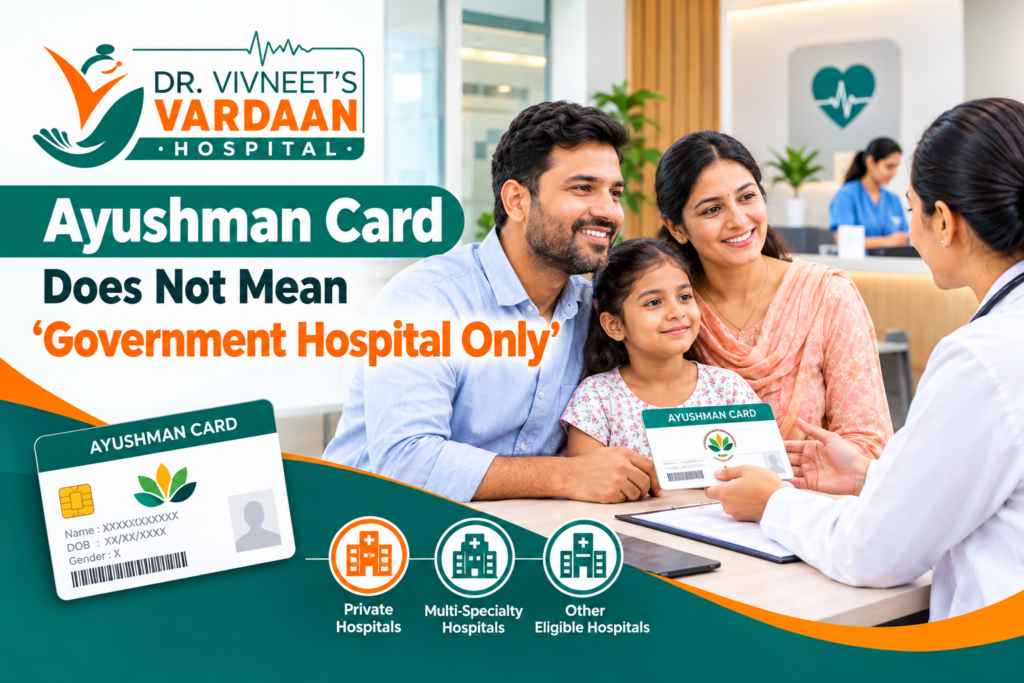
Ayushman Card Does Not Mean “Government Hospital Only”

Ayushman Card Does Not Mean “Government Hospital Only” Many people believe that an Ayushman Card can only be use at government hospitals. However, this is not always true. Under the Ayushman Bharat PM-JAY scheme, eligible beneficiaries may receive cashless treatment at empanelled hospitals, which can include both government and private hospitals. Therefore, if you have an Ayushman Card, you may have access to treatment at an eligible private hospital as well. The hospital must be empanelled under the applicable Ayushman scheme, and the required treatment must be covered under the scheme. Can You Use an Ayushman Card at a Private Hospital? Eligible patients can use an Ayushman Card at a private hospital if the hospital is part of the Ayushman scheme. However, not every private hospital accepts Ayushman Card benefits. So, check if the hospital is currently empanelled and whether your require treatment is cover. At Dr. Vivneet’s Vardaan Hospital in Patiala, eligible patients can ask the hospital team about Ayushman Card eligibility, covered treatments, and required documents. What Does Ayushman Card Treatment Mean? The Ayushman Bharat scheme is design to help eligible families get healthcare without paying the full cost of cover treatment themselves. Depending on the scheme rules and treatment package, benefits may cover hospitalisation and other approved medical services. However, coverage depends on: Patient eligibility Hospital empanelment The treatment or procedure Applicable package and scheme rules Required documents and verification So, having an Ayushman Card does not mean every treatment at every hospital is free. Government Hospital vs Private Hospital Under Ayushman A common misunderstanding is that Ayushman Card holders can only visit government hospitals. In reality, the scheme works through a network of approved government and private hospitals. This gives eligible patients more options when choosing where to seek covered treatment. Before visiting a private hospital, it is better to confirm whether: The hospital is currently empanelled. Your Ayushman Card is valid and eligible. The required treatment is cover. Any additional documents are require. The treatment can be provided under the applicable package. Ayushman Card for Children and Newborn Care Parents may also have questions about using an Ayushman Card when their child or newborn needs hospital treatment. For children who need special care, such as NICU or pediatric treatment, families should check if the hospital is approve under the scheme and if the treatment is cover. At Dr. Vivneet’s Vardaan Hospital, families can talk to the hospital team about their child’s treatment and ask about the Ayushman Card process. The child’s treatment should always depend on their health condition. Ayushman Card eligibility and the right medical treatment are separate matters. What Documents May Be Require? The hospital may ask for documents needed to verify eligibility and process the Ayushman Card benefit. Depending on the case, you may be ask to provide: Ayushman Card or beneficiary details Aadhaar or another accepted identification document Relevant medical records Previous treatment documents, if applicable Referral or other documents, when required The exact requirements can vary depending on the treatment and applicable scheme rules. Does Ayushman Card Cover Every Treatment? No. An Ayushman Card does not mean that every medical service is automatically covered. Coverage depends on the government scheme, treatment package, eligibility rules, and whether the hospital is approve under the scheme. Some treatments may have certain rules or may not be cover. So, patients should check with the hospital before starting planned treatment. Why Check Ayushman Eligibility Before Treatment? Checking eligibility before treatment helps families understand their options and avoid confusion about payment and coverage. If you are looking for Ayushman Card treatment in Patiala, contact an empanelled hospital and ask about: Your eligibility Available treatment packages Required documents Cashless treatment process Any applicable conditions or exclusions Ayushman Card Hospital in Patiala If you are looking for an Ayushman Card hospital in Patiala, remember that the card is not limit to government hospitals. Eligible patients may also get cover treatment at an approve private hospital, depending on the scheme rules and treatment eligibility. Dr. Vivneet’s Vardaan Hospital in Patiala provides care for mothers, newborns, and children. Families can contact the hospital team to check if the require treatment is cover under the applicable Ayushman scheme and which documents are need. Conclusion An Ayushman Card does not mean you can only get treatment at a government hospital. Eligible patients may also get cover treatment at approve private hospitals. However, always confirm the hospital’s approval, patient eligibility, and treatment coverage before starting treatment. If you are looking for Ayushman Card treatment in Patiala, talk to the hospital team to check your eligibility, treatment options, and the required process. Follow up Instagram and Facebook for more information. FAQs Can I use my Ayushman Card at a private hospital? Yes. Eligible patients can use their Ayushman Card at a private hospital if the hospital is approve under the scheme and the require treatment is cover. Is every private hospital cover under Ayushman? No. Only hospitals that are empanelled under the applicable scheme can provide covered Ayushman services. Does an Ayushman Card make every treatment free? No. Coverage depends on the patient’s eligibility, hospital empanelment, treatment package, and applicable scheme rules. Can children receive treatment using an Ayushman Card? Eligible children may receive covered treatment under the applicable scheme. Parents should check their child’s eligibility and confirm whether the require treatment is cover. Can I use an Ayushman Card for NICU or pediatric treatment? Coverage depends on the scheme, hospital approval, eligibility, and treatment package. Families should confirm these details with the hospital before starting treatment. How can I check whether a hospital accepts Ayushman Card? You can check the hospital’s current approval under the Ayushman scheme through official government resources or ask the hospital’s Ayushman help desk for confirmation. Yes. Eligible patients can use their Ayushman Card at a private hospital if the hospital is approve under the scheme and the require treatment is cover. No. Only hospitals that are empanelled under the applicable scheme can provide covered Ayushman services. No.
Advanced NICU care for newborns in Patiala
Blog

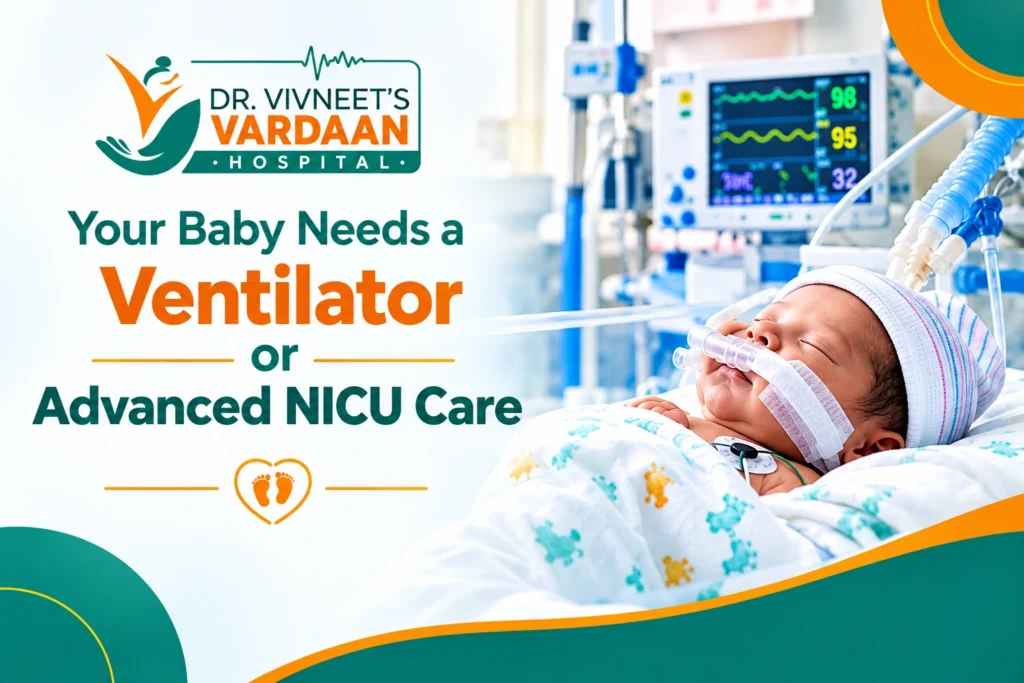
Your Baby Needs a Ventilator or Advanced NICU Care

Your Baby Needs a Ventilator or Advanced NICU Care. Do You Have to Travel to Chandigarh? When a newborn has serious breathing problems, an infection, complications from being born early, or a brain injury caused by low oxygen, quick medical care is very important.If doctors suggest taking the baby to PGIMER Chandigarh or another specialist hospital, parents may worry about the journey, finding a hospital bed, and the cost of treatment. Another important question is whether your baby can safely get the needed treatment at a well-equipped NICU closer to home. However, going to Chandigarh may still be the right medical choice. However, if the right care and a suitable NICU bed are available in Patiala, staying closer to home may help avoid an unnecessary long journey. Advanced newborn care available in Patiala Dr. Vivneet’s Vardaan Hospital, near Rajindra Hospital, has a Level III NICU for newborns who need advanced care. Its listed services include: Conventional and high-frequency ventilation (HFOV):Breathing support for newborns with serious breathing problems, based on their medical needs. Inhaled nitric oxide (iNO): A specialised treatment that may be use for some newborns with high blood pressure in the lungs, after proper medical assessment. Therapeutic hypothermia: Carefully controlled cooling for selected babies with moderate to severe HIE caused by a lack of oxygen around birth. Brain and bedside monitoring: This includes aEEG/CFM, close monitoring of newborns, and other tests and intensive care support. Transport and continuing care: Neonatal transport support, care for premature babies, nutrition support, and treatment for serious newborn infections. The hospital also has a PICU for seriously ill babies and children who need close monitoring and intensive care. This may include children with severe pneumonia, breathing problems, sepsis, or other serious conditions.The hospital provides 24-hour emergency care and medical support. However, a specialist should confirm that the needed service, medical team, and suitable bed are available before accepting the child. If your doctor recommends transfer to PGI, ask these seven questions What is my child’s diagnosis and what treatment is urgently need? Ask why the baby needs to be transferred. It may be for a ventilator, a specific treatment, specialist surgery, or another medical service. Has the receiving hospital accepted the patient? When possible, the doctors at both hospitals should speak directly and confirm that the right bed and equipment are available. Is an appropriate facility available in Patiala? A local NICU or PICU should be choose only if it can safely provide the care your child needs. How will the child be stabilise before departure? Discuss the baby’s breathing, blood flow, temperature, blood sugar, medicines, and monitoring needs. What equipment will the ambulance carry? A very sick newborn on a ventilator may need a transport ventilator, incubator or warming support, monitors, enough oxygen, and backup equipment during the journey. Who will care for my child during the journey? A trained medical transport team should travel with a child who needs intensive care. They should also have a plan in case the child’s condition gets worse during the journey. What is the payment arrangement at the destination? Check the current scheme eligibility, hospital approval, and treatment package. In an emergency, money-related checks should not delay urgent treatment or a medically needed transfer. Ask why the baby needs to be transferred. It may be for a ventilator, a specific treatment, specialist surgery, or another medical service. When possible, the doctors at both hospitals should speak directly and confirm that the right bed and equipment are available. A local NICU or PICU should be choose only if it can safely provide the care your child needs. Discuss the baby’s breathing, blood flow, temperature, blood sugar, medicines, and monitoring needs. A very sick newborn on a ventilator may need a transport ventilator, incubator or warming support, monitors, enough oxygen, and backup equipment during the journey. A trained medical transport team should travel with a child who needs intensive care. They should also have a plan in case the child’s condition gets worse during the journey. Check the current scheme eligibility, hospital approval, and treatment package. In an emergency, money-related checks should not delay urgent treatment or a medically needed transfer. These questions follow standard principles for newborn referral and transport, including communication between hospitals, stabilising the baby before transfer, and using a properly equipped transport team. Why timing matters – especially for babies needing cooling Therapeutic cooling is not need for every baby after a difficult birth. For selected newborns with moderate to severe HIE, doctors may start cooling as early as possible, ideally within six hours of birth. The treatment is usually carefully monitor for 72 hours. If HIE is suspect, families should speak to the treating neonatologist immediately. They should not wait for routine paperwork or try to cool the baby themselves. Can treatment be cashless under a government health scheme? For eligible families, the answer may be yes. However, a health card does not mean every treatment is free at every hospital. Eligibility, the treatment package, hospital approval, and any require authorisation should be check.  Punjab families – Mukh Mantri Sehat Yojana: The state scheme may provide eligible families with cashless hospital treatment cover of up to ₹10 lakh per family each year at participating hospitals in Punjab and Chandigarh, subject to the scheme rules and approved treatment packages. Eligible families from other states – Ayushman Bharat PM-JAY:National portability allows eligible PM-JAY beneficiaries to use approved cashless treatment at empanelled hospitals across India, subject to verification and scheme rules. The standard national cover is ₹5 lakh per family per year. Any additional state-funded cover may have separate portability rules. Advanced newborn treatment packages: The National Health Authority lists therapeutic cooling under advanced newborn care and HFOV/iNO under critical newborn care. However, the exact package available in Punjab and whether the hospital can provide it cashlessly should be confirmed for each admission. For treatments covered under an approved cashless package, eligible patients generally should not have to pay separately for those covered services. Ask

iNO therapy for newborns in NICU
Blog

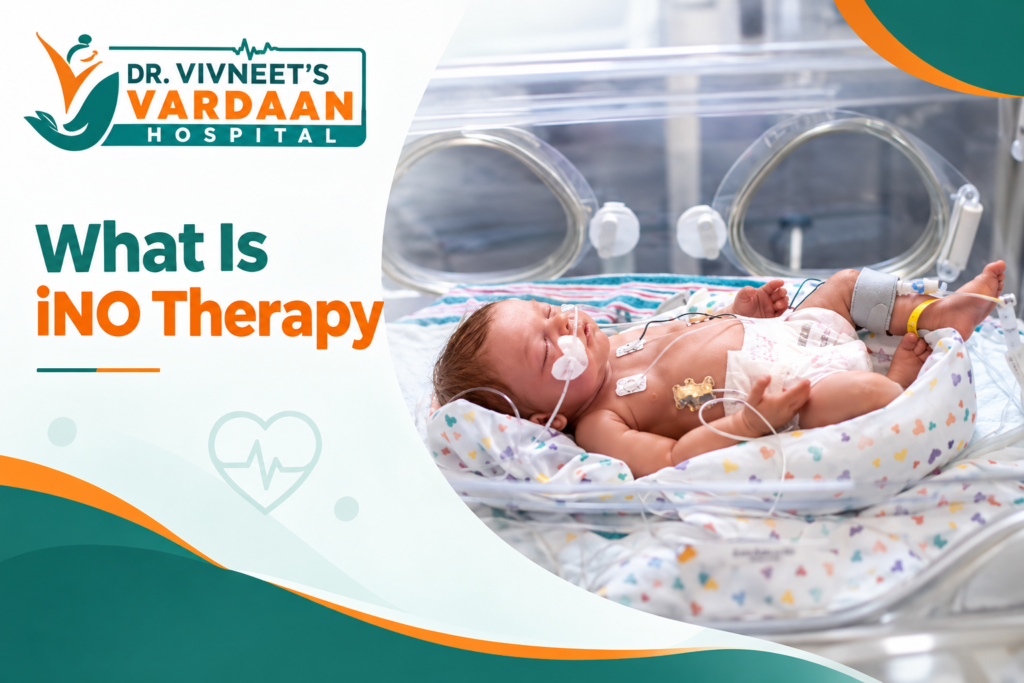
What Is iNO Therapy

What Is iNO Therapy? A Complete Guide for Parents When a newborn has trouble breathing, doctors may use different treatments to help the baby breathe and keep oxygen levels normal. One treatment is called iNO therapy, or inhale nitric oxide therapy. iNO therapy may help some newborns with serious breathing problems and low oxygen levels. It is usually give in the NICU with close medical monitoring. Understanding this treatment can help parents feel more informed during their baby’s NICU stay. This guide explains what iNO therapy is, when doctors may use it, how it works, and what parents can expect. What Is iNO Therapy? iNO therapy means inhaled nitric oxide therapy. It gives a controlled amount of nitric oxide gas directly into the baby’s lungs through their breathing system. Nitric oxide helps relax the blood vessels in the lungs. This can improve blood flow and may help the baby get more oxygen. Doctors may use iNO therapy when a newborn has low oxygen levels due to certain lung or blood vessel problems. How Does iNO Therapy Work? Nitric oxide mainly acts on the blood vessels in the lungs. It helps widen the blood vessels in the lungs. This allows blood to flow more easily through the lungs. It may also help the body take in oxygen and remove carbon dioxide. The baby usually receives iNO through a breathing support system. Doctors carefully control the amount of nitric oxide and closely watch how the baby responds. When Is iNO Therapy Use in Newborns? Doctors may use iNO therapy for some newborns with conditions such as persistent pulmonary hypertension of the newborn (PPHN). It may also be use for some babies with serious breathing problems when other treatments have not help enough. However, iNO therapy is not right for every baby with breathing problems. The neonatologist decides if it is suitable after checking the baby’s condition, oxygen levels, and overall health. What Is PPHN? Persistent pulmonary hypertension of the newborn (PPHN) is a condition where the blood vessels in a baby’s lungs stay too narrow after birth. This can make it difficult for blood to receive enough oxygen in the lungs. In some babies with PPHN, iNO may help relax the blood vessels in the lungs and improve oxygen levels. How Is iNO Therapy Give? iNO is usually give through the baby’s respiratory support system. Depending on the baby’s condition, respiratory support may include: Mechanical ventilation CPAP or other breathing support Other respiratory support methods recommended by the medical team The medical team uses special equipment to give nitric oxide and carefully check its levels. How Long Does iNO Therapy Last? The duration of iNO therapy is different for every newborn. Some babies may need iNO for a short time, while others may need it for longer. The medical team regularly checks the baby’s oxygen levels, breathing, blood gases, and other signs. When the baby’s condition improves, doctors may slowly reduce the nitric oxide level instead of stopping it suddenly. How Do Doctors Monitor a Baby During iNO Therapy? Close monitoring is an important part of iNO treatment. The NICU team may monitor: Oxygen saturation Heart rate Breathing rate Blood pressure Blood gas levels Lung function The baby’s overall clinical condition Response to the treatment The medical team may also do tests such as an echocardiogram to check the baby’s heart function and blood flow through the lungs. Are There Risks or Side Effects of iNO Therapy? Like any medical treatment, iNO therapy can have potential risks. The medical team carefully controls the dose and closely monitors the baby during treatment. In some cases, iNO may affect blood pressure, increase methemoglobin levels, or cause lung-related effects. Stopping iNO too quickly may cause oxygen levels to drop suddenly in some babies. Therefore, doctors usually reduce the treatment slowly when appropriate. The exact risks depend on the baby’s condition and other treatments being use. Is iNO Therapy Safe for Newborns? iNO therapy can be an important treatment for some newborns, especially those with certain types of pulmonary hypertension and low oxygen levels. However, it is not a routine treatment for every newborn with breathing difficulty. A neonatologist checks the baby’s condition and decides if the possible benefits of iNO therapy outweigh the risks. What Can Parents Expect During iNO Therapy? Seeing your baby connected to breathing equipment can feel worrying. It is normal for parents to have questions. During iNO therapy, your baby may be connect to several monitors and breathing support machines. The NICU team will closely watch your baby’s condition throughout the treatment. Parents can ask the medical team: Why does my baby need iNO therapy? What condition is the treatment helping? How will you know if it is working? How long might my baby need it? What other treatments is my baby receiving? What signs show that my baby is improving? Talking openly with the NICU team can help you understand your baby’s treatment and progress. What Happens After iNO Therapy? Once the baby’s oxygen levels and overall condition improve, doctors may slowly reduce iNO therapy. The baby may still need other breathing support or oxygen for some time. This depends on the baby’s condition and how well the lungs and heart are working. The medical team will continue monitoring the baby during this period. Why Is Specialist NICU Care Important? Newborns receiving iNO therapy need close monitoring because their oxygen levels and breathing can change quickly. A specialised NICU team closely watches the baby, adjusts breathing support, and responds quickly if the baby’s condition changes. At Dr. Vivneet Vardaan Hospital, newborns with serious breathing problems can receive specialist neonatal care, continuous monitoring, and medical support. Conclusion iNO therapy is a specialised treatment for some newborns with serious oxygen problems, especially certain cases of pulmonary hypertension. It helps relax the blood vessels in the lungs, which may improve blood flow and oxygen levels. Because every newborn is different, an experienced neonatal team should decide the treatment after carefully checking the

Scroll to Top