
Paediatrician in Patiala

Safe newborn feeding advice about ghutti, honey, gripe water and water
Blog

Ghutti, Honey, Gripe Water and Water for Newborns

Ghutti, Honey, Gripe Water and Water for Newborns: What Should Parents Know? Many Indian families follow traditional ways of caring for newborn babies. These may include giving ghutti (janam ghutti), honey, gripe water, or plain water soon after birth. Family members may suggest these remedies to help with gas, digestion, or sleep. However, these products are not recommended for newborns. A baby’s body is still developing, so some substances may cause harm. At Dr. Vivneet’s Vardaan Hospital, Patiala, parents can get advice about newborn feeding, nutrition, and safe baby care. What Is Ghutti (Janam Ghutti)? Ghutti, also called janam ghutti, is a traditional liquid given to newborns in some Indian families. It may contain herbs, spices, honey, or other ingredients. Some people believe ghutti helps with digestion and constipation. However, there is no strong evidence that it is safe or helpful for newborns. Why should you avoid ghutti? Its ingredients may not be safe for babies. It may contain harmful germs. Some ingredients may cause stomach problems. It may reduce the amount of breast milk your baby drinks. Therefore, do not give ghutti to your newborn unless a doctor recommends a specific treatment for a medical reason. Is Honey Safe for Newborn Babies? No. Never give honey to a baby under 12 months of age. Some families use honey as a baby’s first feed. However, honey may contain bacteria that produce harmful toxins. These can cause a serious illness called infant botulism. Signs of infant botulism may include: Constipation Poor feeding A weak cry Unusual muscle weakness Difficulty swallowing or breathing These signs need urgent medical attention. Never give honey to your baby, even in small amounts or mixed with milk or water. Is Gripe Water Safe for Newborns? Gripe water is a liquid sold to help babies with gas, colic, and stomach discomfort. However, different products contain different ingredients. There is also limited evidence that gripe water works. Gripe water is not routinely recommended for newborns because: Some ingredients may not be suitable for babies. The product may become contaminated. It may delay proper treatment if your baby has a medical problem. Extra liquids may reduce the amount of breast milk your baby drinks. If your baby cries often or seems uncomfortable after feeding, speak to a paediatrician. The doctor can check feeding, burping, and other possible causes before suggesting treatment. Can You Give Water to a Newborn Baby? No. Healthy babies generally do not need plain water during their first six months. Breast milk provides the water and nutrients your baby needs. Even in hot weather, offer breast milk more often instead of giving plain water. Giving water too early may: Reduce the amount of breast milk your baby drinks. Increase the risk of infection from unsafe water. Disturb the body’s salt balance if too much water is given. Affect healthy growth and nutrition. If your baby drinks formula, prepare it exactly as directed on the packaging. Never add extra water or make the formula thinner than instructed. After six months, when your baby starts eating solid foods, you can offer small amounts of safe drinking water with meals. Continue breastfeeding as recommended. What Should You Give Your Newborn Instead? The right feeding method depends on your baby’s needs. Here are some safe options. 1. Breast Milk Breast milk is the best food for most newborns. It provides important nutrients and helps protect babies from infections. Try to start breastfeeding soon after birth. Feed your baby whenever they show signs of hunger. Exclusive breastfeeding is recommended for the first six months unless a medical condition requires a different feeding plan. 2. Colostrum: The First Breast Milk Colostrum is the thick, yellowish milk produced during the first few days after birth. It contains important nutrients and helps protect your baby from infections. Do not throw away colostrum or replace it with honey, ghutti, or other traditional first feeds. 3. Feeding Recommended by a Doctor Some babies, especially premature babies or those with medical problems, may need extra feeding support. A paediatrician or neonatologist can check your baby’s needs and recommend expressed breast milk, infant formula, or supplements when necessary. Do not give supplements or home remedies without medical advice. What If Your Baby Has Gas, Colic, or Constipation? Newborns may cry, pass gas, or strain while passing stools. However, these signs do not always mean your baby needs gripe water or another remedy. You can try these simple steps: Burp your baby during and after feeding. Check that your baby is latching and feeding comfortably. Hold your baby gently after feeding to provide comfort. Ask a healthcare professional about feeding and bowel movements. Seek medical advice if your baby vomits repeatedly, has a swollen tummy, passes blood in the stool, feeds poorly, or does not gain enough weight. Important: A newborn with a temperature of 38°C (100.4°F) or higher needs urgent medical assessment. Breathing problems, unusual sleepiness, or difficulty waking also require urgent medical attention. Conclusion Ghutti, honey, gripe water, and plain water may be part of traditional newborn care. However, these substances can pose risks to babies. Avoid ghutti and gripe water unless a doctor advises otherwise. Never give honey to a baby under 12 months. Also, healthy babies generally do not need plain water during their first six months. Instead, focus on breastfeeding, safe feeding, and regular newborn check-ups. If you are worried about your baby’s feeding, digestion, or growth, consult a qualified paediatrician or neonatologist. Dr. Vivneet’s Vardaan Hospital, Patiala, encourages parents to follow safe, evidence-based advice for their baby’s health and development. Follow us on Instagram and Facebook for more newborn care tips. Frequently Asked Questions Can I give ghutti to my newborn? No. Ghutti may contain unsafe ingredients or harmful germs. Breast milk is the recommended food for most healthy newborns. Can I give honey to my baby after birth? No. Never give honey to a baby under 12 months because it may cause infant botulism, a serious illness. Does gripe water help


where and how should a newborn sleep
Blog

Where and How Should a Newborn Sleep

Where and How Should a Newborn Sleep? A Guide for New Parents Bringing a newborn home is an exciting experience. However, many new parents have questions about where and how their baby should sleep. Safe sleep is important because it helps reduce the risk of sleep-related infant deaths. Newborn babies sleep for several hours throughout the day and night. Therefore, parents should create a safe and comfortable sleeping environment from the beginning. At Dr. Vivneet’s Vardaan Hospital in Patiala, parents can seek guidance about newborn care, feeding, sleep routines, and other essential needs. Understanding safe sleep practices can help parents care for their babies with greater confidence. Where Should a Newborn Sleep? A newborn should sleep in their own cot, crib, or bassinet with a firm, flat, and level mattress. The sleeping surface should be designed for infants and meet applicable safety standards. Ideally, parents should keep the baby’s cot or bassinet in their bedroom for at least the first six months. This arrangement makes nighttime feeding and monitoring easier while supporting safer sleep. However, avoid placing your newborn on an adult bed, sofa, or armchair for sleep. These surfaces can increase the risk of accidental suffocation and other sleep-related injuries. How Should a Newborn Sleep Safely? Following a few simple precautions can help create a safer sleeping environment for your baby. 1. Always Place Your Baby on Their Back Always place your newborn on their back for every sleep, including daytime naps and nighttime sleep. This position helps reduce the risk of sudden infant death syndrome (SIDS). Moreover, continue placing your baby on their back even if they spit up after feeding. Healthy babies usually have protective reflexes that help them manage their secretions. Do not place your baby on their stomach or side to sleep unless a specialist gives specific medical instructions. 2. Use a Firm and Flat Mattress Choose a firm, flat, level mattress that fits the baby’s cot properly. Cover it with a fitted sheet designed for that mattress. In addition, keep pillows, loose blankets, quilts, stuffed toys, and cot bumpers out of the sleeping area. These items can cover the baby’s face and make breathing difficult. A simple, uncluttered sleep space is the safest choice for a newborn. 3. Keep Your Baby’s Head and Face Uncovered Make sure your baby’s face and head remain uncovered during sleep. Avoid using hats indoors while your baby is sleeping unless a healthcare professional advises otherwise. Furthermore, dress your baby according to the room temperature. Too many layers can cause overheating. You can use a properly fitted, non-weighted baby sleep sack instead of a loose blanket if your baby needs an extra layer. 4. Avoid Bed-Sharing Although parents may find it convenient to sleep beside their newborn, sharing an adult bed can increase the risk of suffocation and other sleep-related accidents. Instead, keep the baby’s cot or bassinet beside your bed. This allows you to stay close to your baby while providing a separate sleeping surface. Never sleep with your newborn on a sofa or armchair. The risk is particularly high when a parent is tired or has taken alcohol or sedating medicines. 5. Avoid Weighted Sleep Products Do not use weighted blankets, weighted sleep sacks, or weighted swaddles for newborns. These products can affect a baby’s ability to move and breathe safely. If you choose to swaddle your baby, use a lightweight, breathable material and keep the hips free to move. Always place a swaddled baby on their back. Stop swaddling as soon as your baby shows signs of trying to roll over. Never use a weighted swaddle. 6. Maintain a Comfortable Room Temperature Newborns cannot regulate their body temperature as effectively as older children and adults. Therefore, keep the room comfortably cool and avoid excessive clothing or bedding. Check your baby’s chest or back to see whether they feel unusually hot. Sweating, damp hair, or a flushed appearance may indicate overheating. Also, avoid placing the cot near heaters, radiators, or direct sources of heat. How Many Hours Should a Newborn Sleep? Newborns generally sleep around 14–17 hours in a 24-hour period, although individual sleep patterns vary. Some babies sleep for shorter periods and wake frequently for feeding. During the first few weeks, your baby may sleep for two to four hours at a time. This is normal because newborns need regular feeding throughout the day and night. However, follow your paediatrician’s feeding advice, especially if your baby was born prematurely, has jaundice, or is not gaining weight properly. Some newborns need to be woken for feeds. Should a Newborn Sleep in a Swaddle? Swaddling can help some newborns feel settled. However, it must be done correctly to maintain safe sleep. If you swaddle your baby, follow these precautions: Always place your baby on their back. Keep the swaddle comfortably fitted around the upper body without restricting breathing. Allow enough room for the hips and legs to bend and move naturally. Keep loose fabric away from the baby’s face. Stop swaddling when your baby begins showing signs of rolling. Never use weighted swaddling products. If you are unsure how to swaddle your newborn safely, ask your pediatrician for guidance. Can a Newborn Sleep in a Car Seat or Baby Swing? Car seats are designed to protect babies during travel, not for routine sleep outside the vehicle. Similarly, baby swings, inclined sleepers, and sitting devices are not recommended for routine newborn sleep. If your baby falls asleep in a car seat after travelling, move them to a firm, flat sleep surface as soon as it is safe and practical to do so. Always use an age-appropriate car seat during travel, following the manufacturer’s instructions. Never leave your baby unattended in a sitting device. What Should Parents Know About Premature or Low Birth Weight Babies? Premature and low birth weight babies may need additional monitoring and specialised care. However, safe sleep principles remain important for these newborns. While a baby is receiving hospital care, the neonatal team may recommend

newborn skin changes
Blog

Milia, Baby Acne, Peeling and Common Skin Changes in Newborns

Milia, Baby Acne, Peeling and Common Skin Changes in Newborns A newborn’s skin is soft, delicate, and still adjusting to life outside the womb. During the first few weeks, parents may notice tiny white bumps, red spots, or dry and peeling skin. These changes can look worrying, especially for first-time parents. However, many newborn skin changes are normal and improve on their own. Milia, baby acne, and skin peeling are common examples. Most do not need special treatment. In this guide, Dr. Vivneet’s Vardaan Hospital explains common newborn skin changes, their causes, and how parents can care for their baby’s delicate skin. What Are Common Skin Changes in Newborns? A baby’s skin may look different during the first few days and weeks after birth. This happens because the skin is adapting to the outside environment. Some common newborn skin changes include: Milia: Tiny white or yellow bumps, usually on the nose and cheeks. Baby acne: Small red or white spots on the face. Skin peeling: Dry skin that flakes off, often during the first two weeks. Erythema toxicum: A common newborn rash with red patches and small bumps. Birthmarks: Colour marks that may be present at birth or appear soon after. Dry skin: Mild dryness as the baby’s skin adjusts to its new surroundings. Most of these changes are harmless. However, parents should watch for unusual symptoms and seek medical advice when needed. 1. What Is Milia in Newborns? Milia are tiny white or yellow bumps that often appear on a newborn’s nose, cheeks, chin, or forehead. They develop when small amounts of keratin, a natural skin protein, become trapped beneath the skin’s surface. Milia are very common in newborn babies. Importantly, they are not cause by poor hygiene and are usually not painful or itchy. How Can Parents Care for Milia? Milia usually disappear without treatment within a few weeks. Parents can help by following these simple steps: Gently clean the baby’s face with lukewarm water. Pat the skin dry with a soft, clean towel. Avoid squeezing, scratching, or rubbing the bumps. Do not apply acne creams or strong skincare products. Avoid using home remedies unless advised by a healthcare professional. Remember: Milia usually do not require medicines or special creams. 2. What Is Baby Acne? Baby acne is a common skin condition that causes small red or white bumps on a baby’s face. It usually appears on the cheeks, forehead, and nose. However, it is generally harmless and often clears up on its own. Baby acne often develops during the first few weeks after birth. The exact cause is not fully understand, but hormonal changes may play a role. In most cases, baby acne is harmless and improves on its own over several weeks or months. What Does Baby Acne Look Like? Baby acne may cause: Small red bumps on the cheeks. Tiny white or skin-coloured spots. Mild redness around the affected areas. Spots on the forehead or nose. Baby acne is different from milia, which usually appear as tiny white bumps without surrounding redness. How Should Parents Care for Baby Acne? Simple skin care is usually enough. Wash the baby’s face gently with lukewarm water. Use a soft cloth without scrubbing the skin. Avoid squeezing or picking at the spots. Do not use adult acne products or medicated creams without medical advice. Avoid applying heavy oils or greasy products to the affected areas. However, if the rash becomes severe, spreads, develops blisters, or does not improve, consult a paediatrician. This is important because some skin conditions can look similar to baby acne and may need different treatment. 3. Why Does Newborn Skin Peel? Newborn skin peeling is common, especially during the first one to two weeks after birth. It is often more noticeable in babies born after their expected due date. Before birth, the baby’s skin is protect by a natural coating called vernix. After birth, the skin begins adjusting to the outside environment, and the outer layer may peel. Peeling is often seen on the hands, feet, ankles, and wrists. It may also appear on other parts of the body. Is Skin Peeling Normal in Newborns? Yes, mild peeling is usually normal when the baby is otherwise healthy and feeding well. The peeling generally improves on its own within a short time. However, widespread peeling, painful cracks, blisters, or skin that looks infect should be check by a doctor. How Can Parents Care for Peeling Skin? Follow these simple skin care tips: Give the baby gentle baths using lukewarm water. Avoid long baths and very hot water. Pat the skin dry instead of rubbing it. Do not pull or remove loose skin. Avoid scented soaps, powders, and harsh skincare products. Ask your paediatrician before using moisturisers if the skin is very dry or irritated. In most cases, newborn skin peeling does not require special treatment. 4. Other Common Newborn Skin Changes In addition to milia, baby acne, and peeling, newborns may also develop other harmless skin changes. Erythema Toxicum Moreover, erythema toxicum is a common newborn rash. It may appear as red patches with small white or yellow bumps in the centre. The rash can appear on the face, chest, back, arms, or legs. It usually develops during the first few days after birth and clears without treatment. However, parents should seek medical advice if the baby has a fever, blisters, poor feeding, or appears unwell. Birthmarks Some babies are born with birthmarks, while others develop them soon after birth. Common examples include: Salmon patches: Flat pink or red marks, often on the eyelids, forehead, or back of the neck. Congenital dermal melanocytosis: Flat blue-grey patches, often on the lower back or buttocks. Infantile haemangiomas: Red or raised marks that may become more noticeable during the first weeks of life. Many birthmarks are harmless. However, a doctor should assess any mark that grows quickly, bleeds, develops an ulcer, or affects the eyes, nose, or mouth. Dry Skin and Small Red Spots Additionally, a newborn’s skin

Is 10% newborn weight loss normal
Blog

Is 10% Newborn Weight Loss Normal

Is 10% Newborn Weight Loss Normal? When Should Parents Worry? Newborn babies often lose some weight during the first few days after birth. For new parents, this can be worrying. However, a small amount of weight loss is usually normal as the baby adjusts to life outside the womb. But is 10% newborn weight loss normal? The answer depends on your baby’s age, feeding habits, and overall health. A weight loss of around 10% needs careful attention and assessment by a doctor. In this blog, we explain why newborns lose weight, when to seek medical advice, and how parents can support healthy newborn growth. Is 10% Newborn Weight Loss Normal? Some weight loss is normal during the first few days of life. Babies lose extra fluid after birth, so their weight may decrease temporarily. However, 10% weight loss is an important warning point that needs medical assessment. If your baby loses more than 10% of their birth weight, a paediatrician should check their feeding, hydration, and general health. For example, if your baby weighed 3 kg at birth, a 10% weight loss means they now weigh 2.7 kg. This does not always mean something is seriously wrong. However, it is important to identify the cause and make sure your baby is getting enough milk. Why Do Newborn Babies Lose Weight After Birth? There are several reasons why newborn babies lose weight during the first few days. 1. Loss of Extra Body Fluid Before birth, babies receive fluids through the placenta. After birth, their bodies begin adjusting to life outside the womb. As a result, they naturally lose some extra fluid. 2. Breastfeeding Is Still Becoming Established During the first few days, mothers produce colostrum, the first milk. It is rich in nutrients and antibodies. However, it is produce in small amounts. Sometimes, babies may need help learning to latch properly and feed effectively. Therefore, a feeding assessment can help identify any difficulties. 3. Feeding Difficulties Some newborns may not get enough milk because of a poor latch, sleepy feeding behaviour, or difficulties with sucking and swallowing. Consequently, their weight may drop more than expected. Early feeding support can help address these problems. When Does Newborn Weight Loss Become a Concern? Parents should pay attention to the amount of weight their baby loses and how quickly the baby starts gaining weight again. The following signs need attention: Your baby loses 10% or more of their birth weight. Struggles to latch or feed properly. Your baby has fewer wet nappies than expected for their age. Appears unusually sleepy or difficult to wake. Develops yellowing of the skin or eyes. Continues losing weight instead of starting to gain it. Seek urgent medical advice if your baby has significant weight loss or signs of poor feeding or dehydration. If your baby is difficult to wake, has breathing difficulties, or appears seriously unwell, seek emergency medical care. How Can Parents Tell If Their Newborn Is Getting Enough Milk? Weight is only one way to check whether your baby is feeding well. Parents should also observe feeding patterns, wet nappies, and their baby’s behaviour. Look for these signs: Regular feeding: Newborns commonly breastfeed 8–12 times in 24 hours. Wet nappies: The number should increase over the first few days. By around day five, babies generally have at least six wet nappies in 24 hours. Effective sucking: Your baby should show signs of sucking and swallowing during feeds. Alert behaviour: Your baby should wake for feeds and respond normally. Steady weight gain: After the initial weight loss, your baby should begin gaining weight. These signs can help parents understand whether feeding is going well. However, they do not replace a newborn check-up. How Can You Help Your Newborn Gain Weight Safely? If your baby has lost more weight than expected, your doctor may recommend the following steps. 1. Feed Your Baby Frequently Offer feeds regularly and respond to your baby’s hunger cues. If your baby is very sleepy or feeding poorly, ask your doctor how often to wake them for feeds. 2. Check the Breastfeeding Latch A good latch helps your baby transfer milk effectively. A paediatrician, neonatal nurse, or qualified lactation professional can assess feeding and suggest improvements. 3. Monitor Wet Nappies Keep track of wet and dirty nappies. Fewer wet nappies than expected may indicate that your baby is not getting enough milk or may be dehydrated. 4. Attend Newborn Follow-Up Visits Regular weight checks help doctors monitor your baby’s progress. Many babies regain their birth weight within 7–14 days, although some take longer. 5. Follow Your Doctor’s Feeding Advice Some babies need additional feeding support. Your doctor can assess whether expressed breast milk, formula supplementation, or further investigations are appropriate. Do not give water to a newborn or change their feeding plan without medical advice. When Should You Contact a Paediatrician? Contact a paediatrician promptly if your newborn loses 10% or more of their birth weight, is not feeding well, or has fewer wet nappies than expected. You should also arrange a check-up if your baby continues losing weight or does not regain their birth weight as expected. Early assessment helps doctors identify feeding difficulties, dehydration, jaundice, or other health concerns. It also gives parents practical guidance on supporting healthy growth. Newborn Care at Dr. Vivneet’s Vardaan Hospital, Patiala Monitoring your baby’s weight is an important part of newborn care. At Dr. Vivneet’s Vardaan Hospital, Patiala, parents can seek medical guidance about newborn feeding, weight monitoring, and concerns about early growth. A newborn’s weight should always be assess alongside feeding patterns, hydration, and overall health. If you are worry about your baby’s weight loss, consult a paediatrician or neonatologist for an appropriate assessment. Your baby’s health matters. Do not ignore significant weight loss or feeding difficulties during the first days of life. Conclusion Some newborn weight loss is normal, but 10% weight loss should not be ignored. Your baby’s age, feeding, hydration, and overall condition all matter. With timely medical assessment, feeding support,

how many wet diapers should a baby have
Blog

How Many Wet Diapers Should a Baby Have

How Many Wet Diapers Should a Baby Have? When Is No Urine for Hours a Concern? Are you worry because your baby has fewer wet diapers than usual? Wet diapers help parents understand whether their baby is getting enough milk and staying hydrated. However, if your baby has not passed urine for several hours, it may be a sign of dehydration or another health problem. Knowing how many wet diapers to expect can help you recognise warning signs early and seek medical advice when needed. How Many Wet Diapers Should a Baby Have in a Day? The number of wet diapers usually increases during the first week after birth. It also depends on your baby’s age, feeding, and health. Here is a simple guide for parents: Day 1: At least 1 wet diaper in the first 24 hours. Day 2: Around 2 wet diapers in 24 hours. Day 3: Around 3 wet diapers in 24 hours. Day 4: Around 4 wet diapers in 24 hours. Day 5 onwards: Usually at least 6 wet diapers every 24 hours. After the first week, most healthy babies have around 6 or more wet diapers daily. A sudden decrease in wet diapers may mean your baby is not getting enough milk or fluids. What Does It Mean If a Baby Has No Urine for Hours? If your baby has not passed urine for several hours, pay attention to their feeding, behaviour, and other symptoms. Possible reasons include: Not getting enough milk: Your baby may not be feeding well or may have difficulty breastfeeding. Dehydration: Fever, vomiting, diarrhoea, or poor feeding can cause fluid loss. Illness: Some infections and other medical conditions can reduce urine output. Feeding difficulties: A newborn may need help with breastfeeding or feeding routines. Do not assume that fewer wet diapers are normal, especially in a newborn or a baby who seems unwell. When Should You Worry About No Wet Diapers? Contact a healthcare professional promptly if your baby is passing much less urine than usual. Seek urgent medical assessment if: Newborn has not passed urine within the first 24 hours after birth. Baby has no wet diaper for around 8 hours, particularly if this is unusual. Your baby has a dry mouth, fewer tears, or a sunken soft spot on the head. Your baby is feeding poorly, vomiting repeatedly, or has diarrhoea. Your baby seems unusually sleepy, weak, or difficult to wake. Important: Do not wait for 8 hours if your baby appears seriously unwell. Seek emergency medical care if your baby is difficult to wake, has trouble breathing, or shows signs of severe dehydration. How Can Parents Help Maintain Healthy Urine Output? You can monitor your baby’s wet diapers and feeding to help identify possible problems early. Here are some useful tips: Feed your baby regularly: Offer breast milk or formula appropriate for your baby’s age and feeding plan. Track wet diapers: Note how often your baby urinates throughout the day and night. Check feeding patterns: Watch for effective sucking and swallowing during feeds. Look for other symptoms: Monitor fever, vomiting, diarrhoea, dry mouth, and unusual sleepiness. Seek medical advice early: If your baby’s urine output decreases, consult a paediatrician rather than waiting for symptoms to worsen. Do not give plain water to a young infant unless a healthcare professional specifically advises it. When Should You Consult a Paediatrician? Every baby has different feeding needs. However, fewer wet diapers can be an early sign that your baby needs medical attention. A paediatrician can assess feeding, hydration, weight changes, and possible causes of reduced urine output. Early assessment is especially important for newborns, premature babies, and infants who are unwell. Get Expert Newborn and Child Care at Dr. Vivneet’s Vardaan Hospital At Dr. Vivneet’s Vardaan Hospital, Patiala, parents can seek guidance about newborn health, feeding concerns, and changes in a baby’s urine output. If your baby has fewer wet diapers than usual or has not passed urine for several hours, seek timely medical advice. Prompt assessment can help identify potential problems and guide the next steps for your baby’s care. Concerned about your baby’s wet diapers? Consult a paediatrician and get the right guidance for your little one’s health. Medical note: This article is for general information and does not replace an examination by a qualified healthcare professional. Follow up Instagram and Facebook for more information.

Newborn spits up milk after feeds while a parent gently holds the baby
Blog

My Newborn Spits Up Milk After Feeds

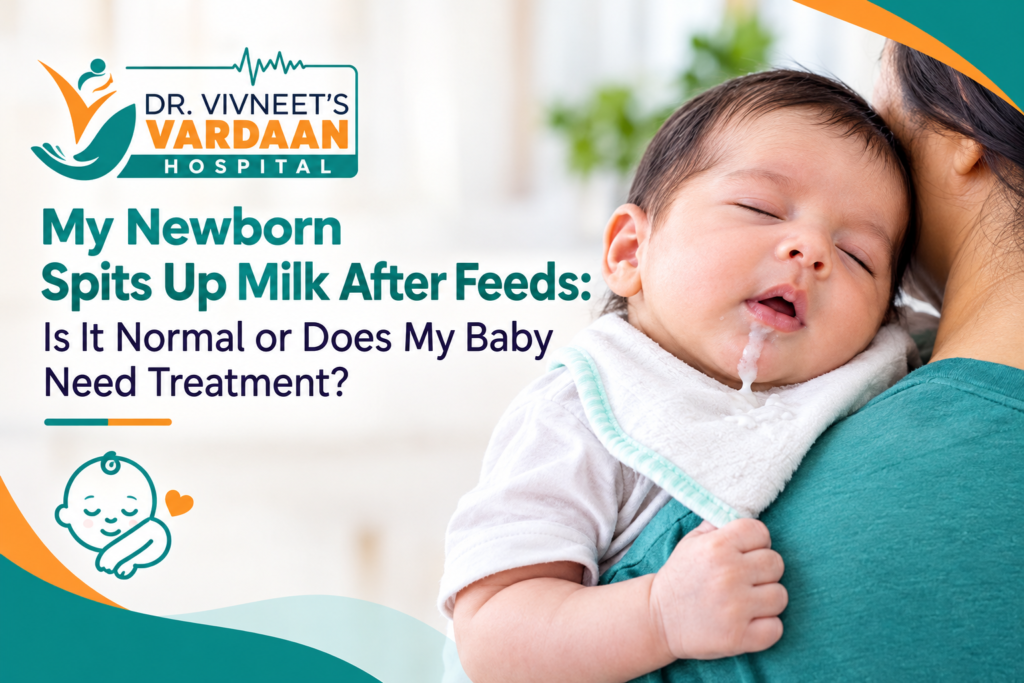
My Newborn Spits Up Milk After Feeds: Is It Normal or Does My Baby Need Treatment? Seeing your newborn spit up milk after feeding can worry you as a parent. However, small amounts of milk coming back up after feeding are common in young babies. In many cases, this happens because a newborn’s digestive system is still developing. It can also happen when a baby drinks too quickly, swallows air while feeding, or drinks more milk than the stomach can hold comfortably. However, not all vomiting is normal. So, parents should know the difference between normal spit-up and signs that may need medical care. Why Does My Newborn Spit Up Milk After Feeds? Newborns have small stomachs and developing digestive systems. The muscle that helps keep milk in the stomach is also still maturing. As a result, some milk may flow back up into the mouth after feeding. Common reasons include: Feeding too much at one time Drinking milk too quickly Swallowing air during feeding Lying down soon after a feed Normal infant reflux An immature digestive system If your baby is otherwise comfortable, feeds well, has regular wet nappies, and is gaining weight, occasional small spit-ups are often not a cause for concern. Is Spitting Up the Same as Vomiting? No. Spit-up is usually a small and gentle flow of milk from the baby’s mouth. Vomiting is different because it is often stronger and can push stomach contents out with more force. This difference is important. A baby who sometimes brings up a small amount of milk but stays comfortable may have normal reflux. However, repeated or forceful vomiting may need a doctor’s assessment. How Much Spit-Up Is Normal for a Newborn? It can sometimes look like your baby has brought up a lot of milk, even when the actual amount is small. There is no fixed amount that is normal for every baby. Instead, parents should look at the baby’s overall health and behaviour. Signs that are generally reassuring include: Your baby feeds well Baby appears comfortable after feeds Has regular wet nappies Your baby is gaining weight The spit-up is small and not forceful Your baby remains active and responsive If you are unsure whether your baby’s spit-up is normal, talk to your baby’s doctor or paediatrician. What Can Parents Do If a Newborn Spits Up After Feeding? Simple feeding and positioning steps may help reduce spit-up. 1. Avoid Overfeeding Try to follow your baby’s feeding cues rather than encouraging your baby to take more milk than they need. 2. Burp Your Baby Burping during or after a feed may help release swallowed air. This can sometimes reduce discomfort and spit-up. 3. Keep Your Baby Upright After Feeding Holding your baby upright for a short period after feeding may help reduce milk coming back up. However, when your baby sleeps, always place them on their back on a firm, flat sleep surface. 4. Check Feeding Technique If your baby is swallowing a lot of air or feeding very quickly, changing the feeding position or technique may help. For bottle-fed babies, parents can also discuss the teat and feeding method with their healthcare professional. When Is Newborn Spit-Up a Warning Sign? Although spit-up is common, some symptoms need medical attention. Contact a healthcare professional if your baby: Vomits repeatedly Has forceful or projectile vomiting Is not feeding well Has fewer wet nappies than usual Is not gaining weight as expected Appears unusually sleepy, weak, or difficult to wake A swollen or painful-looking abdomen Blood in the vomit Has green or yellow-green vomit Has a fever or appears unwell Green vomit, blood in the vomit, breathing problems, severe weakness, or other serious symptoms need urgent medical assessment. Could It Be Newborn Reflux? Yes. Reflux is common in babies because their digestive system is still developing. With reflux, stomach contents can move back towards the food pipe and sometimes come out through the mouth. Many babies with mild reflux continue to feed and grow normally. In these cases, treatment may not be need. However, some babies have reflux symptoms that affect feeding, comfort, or growth. A paediatrician can assess the baby and decide whether further care is need. When Does a Baby Need Treatment for Spitting Up? Treatment is not usually need for simple spit-up when the baby is healthy, feeding well, and growing normally. However, treatment may be considered when vomiting or reflux is causing problems such as: Poor feeding Poor weight gain Frequent distress during or after feeds Repeated vomiting Dehydration Other symptoms that suggest an underlying medical problem The right treatment depends on the cause. So, parents should not give medicines or change their baby’s feeds without first speaking to a healthcare professional. When Should I Take My Newborn to a Doctor? If your newborn keeps vomiting, refuses feeds, loses weight, becomes unusually sleepy, or shows other worrying signs, speak to a healthcare professional for medical advice. Newborns can become unwell quickly. So, if you are concerned, it is better to speak with a healthcare professional rather than trying to find the cause at home. FAQs About Newborn Spitting Up Milk Is it normal for a newborn to spit up milk after every feed? Small amounts of spit-up can happen frequently in young babies. However, if your baby is vomiting large amounts, appears unwell, is not feeding properly, or is not gaining weight, speak with a paediatrician. Why does my newborn spit up milk but seem fine? This can happen because of normal infant reflux or an immature digestive system. If your baby is comfortable, feeding well, and growing normally, occasional spit-up is often not a sign of a serious problem. How can I reduce my newborn’s spit-up? Avoid overfeeding, check the feeding technique, burp your baby, and keep your baby upright for a short time after feeding. Always follow safe sleep guidance and place your baby on their back for sleep. Is projectile vomiting normal in newborns? Projectile vomiting is different from normal small spit-ups.

Vaccination in children at a child hospital in Patiala
Blog

Vaccination in Children: A Complete Guide for Parents

Vaccination in Children: A Complete Guide for Parents Vaccination is an important way to protect children from serious infections. In addition, vaccines help the immune system recognise harmful germs and, as a result, prepare the body to fight these infections. For parents, following the recommended vaccination schedule helps protect children at different stages of growth. Regular visits to a child hospital in Patiala can also help parents keep their child’s vaccination record updated. Why Is Vaccination Important for Children? Children can be more likely to get certain infections because their immune systems are still developing. Vaccines help prepare their immune system to fight diseases before they are expose to them. Childhood vaccines can help protect against illnesses such as: Measles Polio Diphtheria Tetanus Pertussis (whooping cough) Hepatitis B Haemophilus influenzae type b (Hib) Pneumococcal disease Rotavirus Chickenpox, where recommended Vaccination also contributes to community protection by reducing the spread of certain infections. When Should Children Get Vaccinate? Vaccines are generally give according to a child’s age-base schedule. Some vaccines need more than one dose to build and maintain protection. The recommended vaccination schedule may depend on national guidelines, the child’s age, previous vaccinations, health conditions, and other important factors. In addition, a healthcare professional can help parents understand which vaccines may be recommended for their child. Parents should therefore maintain their child’s vaccination card and discuss the schedule with a qualified paediatrician. What Vaccines Do Children Need? The childhood vaccination schedule may include vaccines that protect against several serious infections. In addition, these vaccines help strengthen the child’s immune system and support protection against preventable diseases. Based on the child’s age and vaccination history, a doctor may recommend vaccines such as: BCG Vaccine BCG vaccination helps protect against severe forms of tuberculosis, particularly in children. Polio Vaccine Polio vaccination helps protect children from poliovirus, which can cause serious illness and paralysis. Therefore, following the recommended vaccination schedule is important for maintaining protection against polio. DTaP/DTP Vaccine These vaccines help protect against diphtheria, tetanus, and pertussis. Hepatitis B Vaccine Hepatitis B vaccination helps protect children from the hepatitis B virus, which can cause infection and affect the liver. Therefore, vaccination can help reduce the risk of hepatitis B infection in children. Hib Vaccine The Hib vaccine helps protect against serious infections caused by Haemophilus influenzae type b. Therefore, it plays an important role in protecting children from certain serious bacterial infections. Pneumococcal Vaccine Pneumococcal vaccination helps protect children from infections caused by pneumococcal bacteria. For example, these infections can include some cases of pneumonia and meningitis. Rotavirus Vaccine Rotavirus vaccination helps protect babies and young children from rotavirus infection. As a result, it can help reduce the risk of severe diarrhoea and dehydration caused by the infection. MMR Vaccine The MMR vaccine helps protect against measles, mumps, and rubella. The exact vaccines and timing should follow the vaccination schedule recommended by your child’s healthcare professional. Therefore, parents should consult their child’s healthcare professional for personalised vaccination guidance. Are Vaccines Safe for Children? Vaccines are test and monitor for safety and effectiveness. However, like medicines, they may sometimes cause mild side effects. Common reactions may include: Mild fever Pain or tenderness at the injection site Redness or swelling Irritability Tiredness These reactions are usually mild and temporary. However, parents should contact a healthcare professional if their child develops unusual or worrying symptoms after vaccination. What Should Parents Do Before Vaccination? Before your child’s vaccination appointment: Carry the child’s vaccination record. Tell the doctor about any previous vaccine reactions. Inform the doctor about significant medical conditions or current medicines. Mention if your child is currently unwell. Ask about the vaccine being give and its possible side effects. Follow the recommended schedule for future doses. A paediatrician can check your child’s health and, therefore, decide if vaccination should continue or if a dose needs to be delayed in certain situations. What If My Child Misses a Vaccine? Do not panic if your child misses a scheduled vaccination. Contact your paediatrician and bring your child’s vaccination record to the appointment. This way, the doctor can check previous doses and suggest a suitable catch-up schedule if needed. Parents should avoid restarting or repeating vaccines without professional advice. Can a Child Get Vaccinat When They Have a Mild Illness? A mild illness does not always mean that vaccination needs to be delayed. However, the decision depends on the child’s symptoms and overall health. If your child has a fever, is seriously unwell, or has another health concern, speak with a paediatrician before vaccination. Vaccination and Child Healthcare Vaccination is one important part of keeping children healthy. Regular paediatric check-ups can help monitor your child’s growth, development, nutrition, and overall health. At Dr. Vivneet Vardaan Hospital, parents can consult the paediatric team for their child’s healthcare needs, including vaccination guidance and age-appropriate preventive care. In addition, the team can help parents understand recommended vaccines and routine health needs. Conclusion Vaccination in children helps protect them from many serious infectious diseases. Keeping vaccinations up to date can provide protection during different stages of childhood. Parents should follow the recommended vaccination schedule and keep their child’s vaccination records updated. In addition, if they have questions about missed doses, side effects, or vaccination timing, they should speak with a qualified paediatrician. Dr. Vivneet Vardaan Hospital provides paediatric care in Patiala. In addition, the paediatric team helps parents understand their child’s health needs and make informed decisions about preventive care. Follow up Instagram and Facebook for more information. Frequently Asked Questions About Vaccination in Children Why is vaccination important for children? Vaccination helps protect children from several serious infectious diseases. It prepares their immune system to recognise and fight specific infections. What happens if my child misses a vaccine? Speak with your child’s paediatrician. The doctor can check the vaccination record and recommend a suitable catch-up schedule if needed. Can vaccines cause fever? Some children may have a mild fever after vaccination. Other common reactions include temporary soreness, redness, or swelling

Child with fever receiving care at a child hospital in Patiala
Blog

Fever in Children: When Should Parents Seek Urgent Medical Care

Fever in Children: When Should Parents Seek Urgent Medical Care? Fever is common in children and often happens when the body is fighting an infection. In most cases, fever gets better with rest, plenty of fluids, and proper care. However, some signs may mean that a child needs urgent medical care. Knowing when to seek help can help parents act quickly when their child becomes seriously ill. If you are looking for a child hospital in Patiala, Dr. Vivneet Vardaan Hospital offers specialised medical care for children and newborns. What Is Fever in Children? Fever means a child’s body temperature is higher than normal. It often happens when the body is fighting an infection, such as a cold, flu, throat infection, or ear infection. Fever is usually a sign of an illness, not a disease itself. Parents should also watch how their child feels and behaves and check for any other symptoms. For example, a child with fever may: Feel warmer than usual Become tired or less active Have chills or sweating Eat or drink less Become irritable Sleep more than usual Most childhood fevers are not serious. However, certain warning signs need prompt medical assessment. When Should Parents Seek Urgent Medical Care? Parents should seek urgent medical care if their child has a fever along with concerning symptoms. 1. Difficulty Breathing Seek urgent medical help if your child has: Fast or difficult breathing Severe breathlessness Grunting while breathing Blue or grey lips or skin Significant chest movement while breathing Breathing problems can sometimes indicate a serious infection or another condition that requires immediate assessment. 2. Your Child Is Very Sleepy or Difficult to Wake A child may sleep more than usual when they are unwell. However, if the child is hard to wake, very sleepy or confused, or not responding normally, it can be a warning sign. In this situation, seek urgent medical attention. 3. Severe or Persistent Vomiting Repeated vomiting can make it difficult for children to maintain adequate fluid intake. Seek medical advice if your child: Keeps vomiting Cannot keep fluids down Becomes unusually weak Shows signs of dehydration 4. Signs of Dehydration Fever can increase fluid loss, especially when combined with vomiting or diarrhoea. Possible signs of dehydration include: Very little urine Dry mouth or tongue No tears when crying Sunken eyes Unusual sleepiness Drinking much less than usual Offer appropriate fluids regularly and seek medical advice if you are concerned. 5. A Seizure or Fit Some young children may have a seizure during a fever. Many fever-related seizures are short, and children usually recover well. However, a first seizure, a seizure that lasts longer than expected, or unusual behaviour after the seizure needs urgent medical care. If a child is having a seizure, keep them safe, do not put anything in their mouth, and seek emergency medical help. 6. A Rash That Does Not Fade Under Pressure A fever with a rash can sometimes indicate a serious infection. If your child develops a rash that does not fade when you press it with a clear glass, seek urgent medical care. This is especially important if your child looks or feels very unwell. 7. Severe Headache or Stiff Neck Fever combined with a severe headache, stiff neck, unusual sensitivity to light, confusion, or marked sleepiness can require urgent assessment. Parents should not wait if their child appears seriously unwell. Fever in Babies: When Should You Be Concerned? Babies, especially very young infants, require particular attention when they develop a fever. A baby under 3 months old with a temperature of 38°C (100.4°F) or higher should receive urgent medical assessment. Parents should also seek urgent help if a young baby: Is difficult to wake Is feeding poorly Has breathing difficulties Has fewer wet nappies Develops a concerning rash Has unusual or persistent crying Appears seriously unwell Do not rely only on the temperature reading. A baby’s overall condition is also important. What Should Parents Do When Their Child Has a Fever? If your child is comfortable and has no warning signs, parents can usually focus on rest, fluids, and proper care. Keep Your Child Comfortable Allow your child to rest and avoid excessive clothing or blankets. Encourage Fluids Offer regular fluids to help prevent dehydration. Breastfed babies should continue breastfeeding. Monitor Your Child Pay attention to: Breathing Alertness Fluid intake Urination Skin colour New symptoms Whether the child’s condition is improving or getting worse Use Medicines Carefully Paracetamol or ibuprofen may help a child who is uncomfortable or in distress. Parents should follow the correct dose based on the child’s age and weight. If you are unsure, ask a healthcare professional for advice. Do not give aspirin to children unless specifically advised by a healthcare professional. When Should You Visit a Child Hospital in Patiala? Parents should seek urgent medical care if their child has a fever with serious or worsening symptoms. A child hospital in Patiala can provide the right care when a child needs medical attention. Dr. Vivneet Vardaan Hospital offers specialised care for children with experienced medical professionals and modern healthcare facilities. If your child has severe trouble breathing, is not responding, has a seizure, or looks very unwell, seek emergency medical help immediately. Fever Does Not Always Mean a Serious Illness Fever is a natural response to many infections. Therefore, the number on the thermometer is not the only factor parents should consider. A child with a moderate fever who is awake, drinking fluids, and behaving normally may need less urgent care. However, a child with a lower fever who is very sleepy, having trouble breathing, or showing other warning signs may need urgent medical attention. Always consider your child’s overall condition and seek medical advice when you are concerned. Why Choose Dr. Vivneet Vardaan Hospital? Dr. Vivneet Vardaan Hospital provides specialised healthcare for children, newborns, and families in Patiala. The hospital supports children who need routine medical assessment as well as closer monitoring for more serious conditions. Parents can speak to

Scroll to Top